



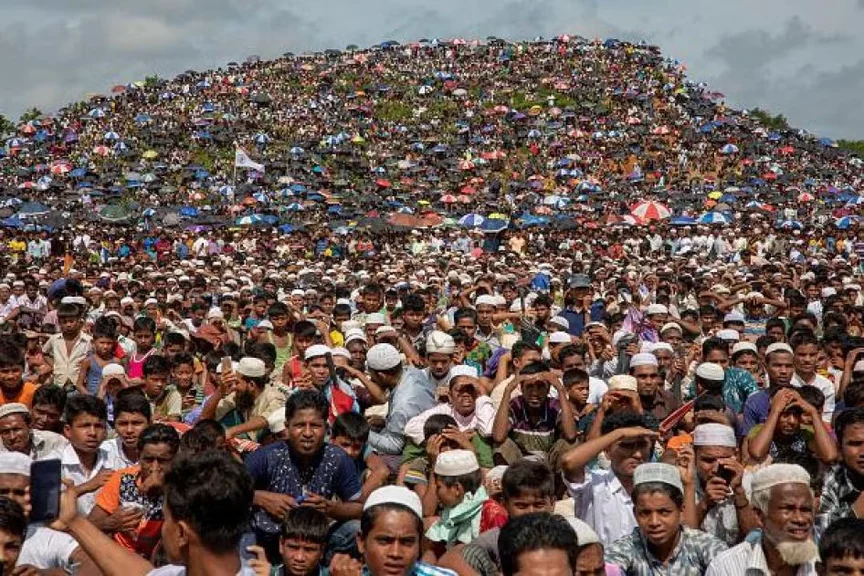
Myanmar remains engulfed in civil war. Amid the ongoing conflict, the Malaysian government has decided to send thousands of Myanmar nationals back to their country. The decision has raised concerns among international human rights organisations.
(Image sourced from external sources)
On 24 November, Malaysian Prime Minister Anwar Ibrahim informed Parliament that his government would continue to cooperate with Myanmar’s military-backed government on the repatriation of refugees.
According to the news agency AFP, Malaysia plans to repatriate a total of 6,803 Myanmar nationals in December. However, it remains unclear how many of them are Rohingya.
According to the United Nations Refugee Agency (UNHCR), Malaysia was home to more than 225,000 registered refugees and asylum seekers as of August this year. Nearly 90 per cent of them are from Myanmar.
In 2017, hundreds of thousands of Rohingya were forced to flee Myanmar following military atrocities in Rakhine State. They sought refuge in several countries, including Bangladesh and Malaysia.
On 19 November, the International Court of Justice (ICJ) ruled that the Myanmar military’s 2017 campaign against the Rohingya constituted genocide. The court also directed that arrangements be made for the safe, voluntary and dignified return of refugees.
Yet, as early as September, more than 160 civil society and human rights organisations issued a joint statement demanding an end to Malaysia’s repatriation programme. They expressed concern that refugees returning to Myanmar could once again face violence, persecution and forced military conscription.
The United Nations Refugee Agency has also pointed out that when refugees are repatriated from detention centres, questions remain as to whether their return is genuinely voluntary.
Meanwhile, the Malaysian Prime Minister has argued that the financial burden of hosting such a large refugee population is becoming increasingly difficult to bear. He has also claimed that the Myanmar government has provided assurances regarding the safety of those returning.
But in a country where civil war continues, and where the state has been held responsible for the genocide of the Rohingya by the International Court of Justice, what guarantee is there that returning refugees will actually be safe?