



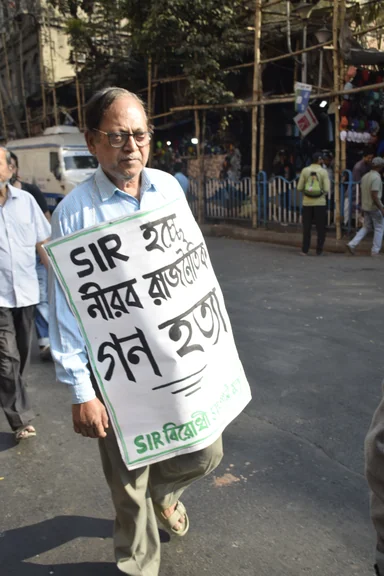
Appeals filed by citizens whose names have been removed from the electoral rolls must be heard on a priority basis. The Supreme Court issued this directive on Monday, 23 November, while hearing a case concerning the Special Intensive Revision (SIR) of electoral rolls in West Bengal.
A bench comprising Chief Justice Surya Kant, Justice Joymalya Bagchi and Justice V. Mohana stated that priority must be given to the disposal of appeals filed by those whose names have been removed from the electoral rolls. Meanwhile, hearings on applications seeking the removal of names already included in the electoral rolls may be kept in abeyance for the time being.
According to a report by the Hindustan Times, a total of 38.31 lakh applications concerning the SIR have been filed in West Bengal. Of these, 22.21 lakh applications seek the restoration of names to the electoral rolls, while the remaining 16.10 lakh challenge the inclusion of names.
But the question remains: when will such an enormous number of applications be resolved?
Advocate Prashant Bhushan informed the court that, of the nearly 38 lakh applications, only slightly more than one lakh have been disposed of.
According to the legal news outlet LiveLaw, Prashant Bhushan stated that nearly 93 per cent of the resolved appeals concerning the deletion of names had been decided in favour of the excluded voters.
These figures naturally raise serious questions about the very process of removing names from the electoral rolls.
Meanwhile, keeping the upcoming Kolkata Municipal Corporation elections in mind, the court has directed that special priority be given to the disposal of appeals filed by excluded voters within the Kolkata municipal area. According to Prashant Bhushan, appeals from more than two lakh excluded voters remain pending in the Kolkata municipal area alone.
At present, West Bengal has 19 appellate tribunals to deal with SIR-related appeals. The Supreme Court has also directed that the number of these tribunals be increased in consultation with the Chief Justice of the Calcutta High Court.
But do these court directives really offer any grounds for optimism or relief? This game of alternating between reassuring observations and adverse rulings continues unabated in matters concerning the SIR.
Meanwhile, citizens excluded through the SIR are being deprived of one government benefit after another. Many are not even receiving their ration entitlements.
Given the pace at which appeals have been resolved so far, it seems quite clear that the upcoming municipal corporation and municipality elections will be conducted using electoral rolls from which these voters remain excluded.
(Image sourced from external sources)