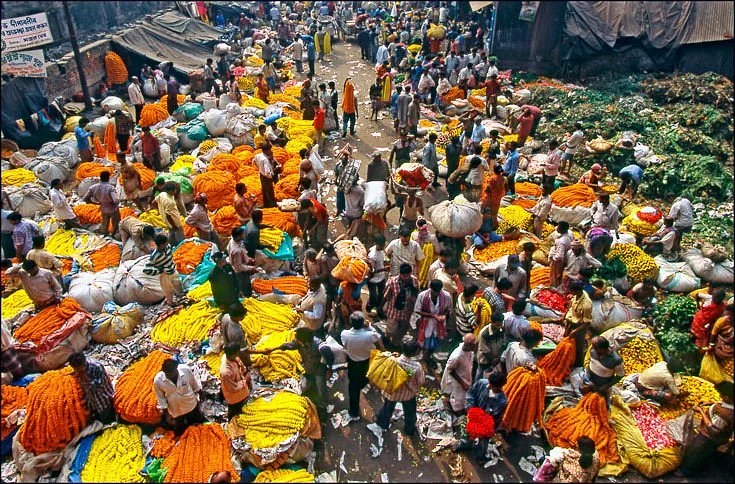



Will thousands of flower growers and small traders at Mallickghat Flower Market now face eviction in the name of beautification and development? Located on the banks of the Hooghly River beneath Howrah Bridge, Mallickghat Flower Market is one of the largest flower markets in Asia. The lives and livelihoods of countless people across Bengal are intertwined with this market. According to official records, the market has existed since 1855. The BJP-led state government has now undertaken an initiative to comprehensively redevelop this historic market. A high-level meeting on the matter was recently held at the Kolkata Municipal Corporation. Among those present were the state's Food Processing and Horticulture Minister Kalyan Chakraborty, Municipal Commissioner Smita Pandey, Jorasanko MLA Vijay Ojha, and representatives of the port authorities. According to a report published by Ei Samay on 22 November, the government's plans include a modern four-storey flower market, cold storage facilities, a waste processing centre, toilets, rest areas and a primary healthcare centre. The riverfront stretching from Mallickghat to Jagannathghat will also be beautified. However, allegations have emerged that the very flower growers and traders around whom this entire project revolves were not invited to the meeting. According to a report published by Anandabazar Patrika on 22 November, the All Bengal Flower Growers and Flower Traders Association had approached the administration nearly two months earlier, seeking discussions on the redevelopment of the market. Yet, according to the association's general secretary, Narayan Nayek, none of its representatives were present at the meeting convened by the administration. A section of traders fears that, in the name of beautification, the existing market may be replaced by a new market with a limited number of shops. If that happens, what will become of thousands of flower growers and small traders? Expressing these concerns, traders have already submitted memorandums to the Chief Minister, the Horticulture Minister and the port authorities. According to an Anandabazar Patrika report published on 23 August, approximately 12,000 to 15,000 flower growers and traders visit this market every day from various districts, including Howrah, Purba and Paschim Medinipur, Nadia, and North and South 24 Parganas. There are allegations that the market management committee was dissolved following the change of government. Regular maintenance, waste collection and electricity services have consequently been disrupted. Flower growers, too, want the market to be renovated. They want cold storage facilities and an improvement in the unhygienic conditions. But what will be the terms of this modernisation—or rather, what will be its price, and who will pay it? How much will traders have to pay to secure a shop in the new market? Will marginal flower growers still be able to sell their produce directly, as they do now? What alternative livelihood arrangements will be made during the redevelopment? Will the government guarantee the rehabilitation of all traders? Clear answers to these questions have yet to emerge.
Quick Takes - Mallickghat Flower Market: Comprehensive Development or Mass Eviction?