



The air used to have a memory. If you walked into a forest a generation ago, the breeze tasted of damp earth, sweet pine, and the quiet moss that had taken three hundred years to grow. It felt eternal. It felt like a promise.
As children, we did not just play in the woods; we lived inside their heartbeat. We climbed oaks that had seen our great-grandparents born, tucked handwritten secrets into the deep ridges of their bark, and fell asleep on blankets of fallen leaves to a canopy whispering stories in the wind. There was a profound, unshakeable peace in knowing that these giants stood guard over our world. They were the anchors of our climate, the keepers of our water, and the architects of the very air that filled our lungs. We took for granted that they would always be there, and that our children, and their children, would inherit the same emerald sanctuaries.
But somewhere along the way, we broke the promise.
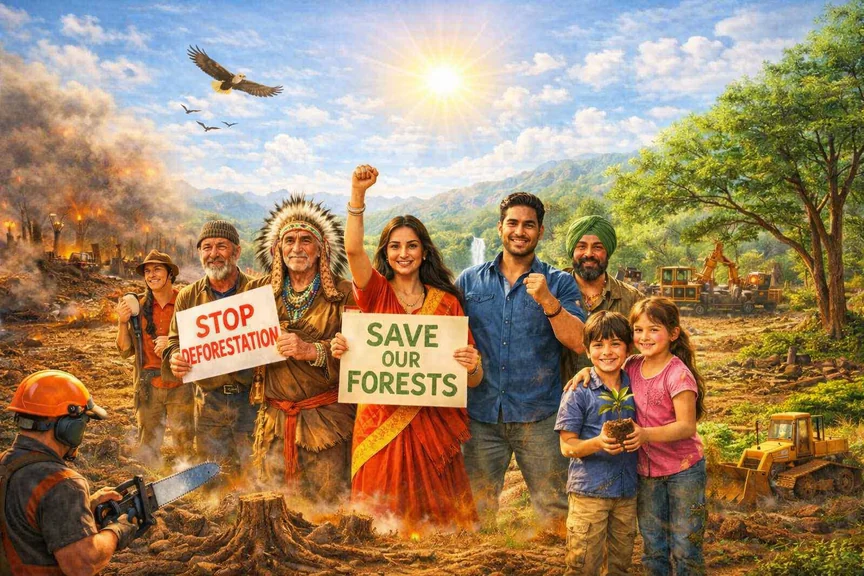
Today, that ancient whispering has been replaced by the brutal, mechanical roar of the chainsaw and the thundering crash of centuries-old giants hitting the forest floor. We are witnessing the systematic dismantling of our planet’s life-support system. Every single day, vast tracts of pristine forest are erased from the map, traded for immediate, fleeting convenience, livestock grazing, and monoculture plantations.
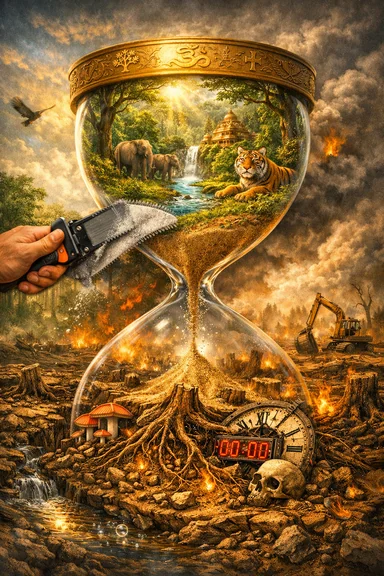
We are not just losing lumber. We are erasing the future. By stripping the earth of its trees, we are actively writing an expiry date onto a world that was meant to be timeless.
The Price of an Inherited Silence
To understand what we are losing, we must look at what a forest actually is. It is not merely a collection of trees standing together like commodities in a warehouse. A forest is a living, breathing network, a complex web of roots, fungi, soil, microorganisms, and creatures that communicate, sustain one another, and regulate the global climate. They are the literal lungs of our planet, inhaling our carbon excesses and exhaling the very oxygen that keeps humanity alive.
When we destroy them, the consequences are not distant abstract concepts; they are immediate and devastating. Trees are our greatest natural allies against a warming planet. Deforestation does not just stop carbon absorption; when these forests are burned or left to rot, they release immense amounts of stored carbon dioxide back into the atmosphere, accelerating the countdown on our global climate clock.
Millions of species call these canopies home. When a forest is leveled, we lose intricate ecosystems, rare wildlife, and potential medical breakthroughs hidden within undiscovered flora. We are creating a biological wasteland. Furthermore, forests act as giant sponges, absorbing rainfall and releasing it slowly back into the atmosphere. Without them, the land cycles violently between catastrophic flooding and severe, parched droughts, turning once-fertile soil into barren dust.
We are trading our long-term survival for short-term profit, and the invoice for this transaction will be handed directly to the generations who had no say in the purchase.
A World with an Expiry Date
Imagine the world fifty or sixty years from now, a world where the current trajectory of deforestation has reached its tragic, logical conclusion.
The landscapes will be quiet, but not the peaceful quiet of a sanctuary. It will be the heavy, stifling silence of a world that has lost its song. The vibrant, chaotic symphony of birds, insects, and rustling leaves will be replaced by a stagnant, dry heat. The air will feel different, heavier, thinner, and stripped of the crisp, vibrant freshness that only a living forest can provide.
Our descendants will grow up in a world of concrete, dust, and artificial shade. They will know of the Amazon, the boreal forests of the north, and the ancient jungles of Southeast Asia only through digital archives, old photographs, and historical documentaries. To them, a forest will be a mythological concept, much like the pristine oceans or the great ice sheets of the past.
By treating our forests as disposable assets rather than sacred infrastructure, we are effectively setting a timer on human habitability. We are creating a fragile, volatile environment where clean water is a luxury, predictable weather is a memory, and the natural beauty that once healed the human soul is entirely gone.
The Conversation We Dread
The true tragedy of deforestation is not just ecological; it is deeply emotional. It is a betrayal of the ultimate ancestral contract, which is to leave the world better, or at least as whole, as we found it.
Picture a grandchild sitting on a porch decades from now, looking out over a dry, degraded landscape. They will not ask us about our technological breakthroughs, our stock market highs, or the speed of our internet. They will not care about the wealth we accumulated or the political debates that consumed our attention.
They will hold up an old, faded photograph of a lush, green mountain canopy, a photo from our time, and they will look into our eyes. In a world grown hot, harsh, and breathless, they will ask the most heartbreaking question imaginable: What did a forest feel like? It looked so beautiful. Why didn’t you save it for us?
What will our excuse be? That we needed more disposable packaging? That clearing the land for a few decades of cheap goods was worth more than their right to a stable climate and a beautiful world?
Our current justifications will taste like ash in our mouths when we have to look at the generations we shortchanged and admit that we knew exactly what we were doing, but chose not to stop.
Rewriting the Expiry Date
The clock is ticking, and the shadows are lengthening, but the final chapter of this story has not yet been written. The expiry date we have stamped onto the earth can still be erased, but it requires us to radically shift how we view our relationship with nature.
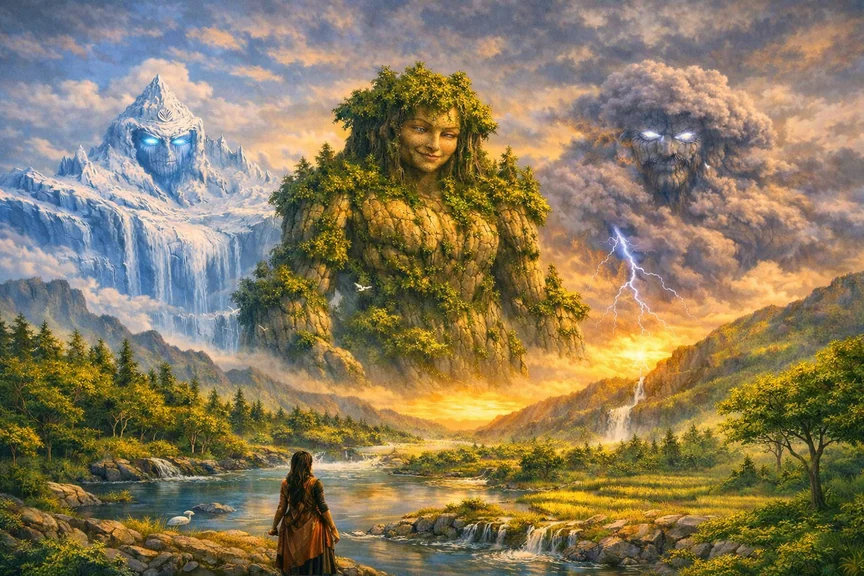
We must move away from a mindset of consumption and return to a mindset of stewardship. In the old mindset, forests were seen merely as timber and land banks, operating under the illusion of infinite growth on a finite planet. The new mindset requires us to see forests as vital life-support systems, moving toward sustainable harmony, balance, and the protection of our ecosystems.
Protecting the remaining forests is not an act of charity; it is an act of self-preservation. It means demanding strict anti-deforestation laws, supporting sustainable supply chains, empowering the Indigenous communities who have guarded these lands for millennia, and investing heavily in global reforestation efforts. It means realizing that a standing forest is infinitely more valuable to human survival than any product that could be built upon its ruins.
The trees have always kept our peace. For thousands of years, they filtered our air, quieted our minds, and anchored our world. Now, in their hour of greatest peril, they need us to be their voice.
We must act today, fiercely and without compromise, so that when our children look back at this pivotal moment in history, they will not remember a generation that let the world wither away in silence. Instead, they will remember the generation that stood up, stopped the axes, and gave them back their future.
There must be some efforts from the government side as well. If they reserve a sizeable percentage of score of the academic session of the school college going children on plantation, if the annual appraisal report of an employee be written not only focusing upon his/her performance in the professional field, instead if a percentage was reserved for his/her action to save our planet, if payment of an income tax can be discounted or waived off depending upon his/her action towards plantation then by this little steps, we can take a steps forward to save our planet, to extend its expiry date, to gift a greener place to our next generations