



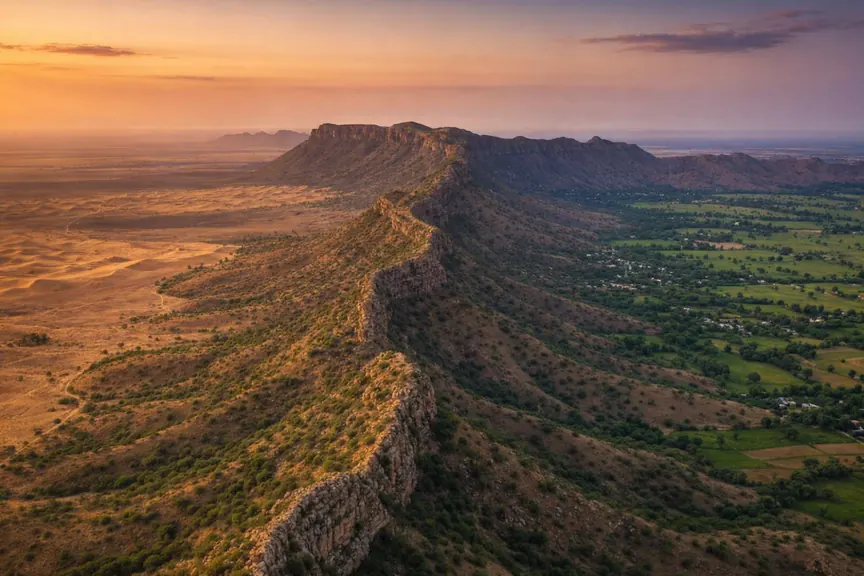
On March 20, 2026, the Supreme Court of India delivered a judgment that fundamentally realigns our understanding of Bio-environmental integrity. By upholding the railway redevelopment project at Bijwasan and distinguishing between a "natural forest" and "invasive green cover," the Court has moved beyond a fixation on visual scale to a more forensic appraisal of the ecological body politic.
The case centered on the Aravalli ridge—Delhi’s primary ecological lung. For decades, urban planning has been trapped within a Dominant Utilitarian Model. This is a framework that views the natural world primarily as a collection of useful, manageable resources rather than a living system with its own inherent somatic life. This reductionist view, failing to acknowledge nature's intrinsic vital systems, reduced the Aravalli ridge to a mere repository of commodities—timber, "green cover," and development potential.
However, the forensic reality on the ground in Bijwasan revealed a profound state of internal stress caused by this approach: 70% of the vegetation consisted of Prosopis juliflora, commonly known as Vilayati Kikar. Introduced during colonial-era afforestation to provide a "quick green fix" that prioritized rapid, utilitarian "greening" over ecological depth, this species has since become an interlocking friction trap, a biological closure that suffocates the native vitality of the Aravalli ecosystem.
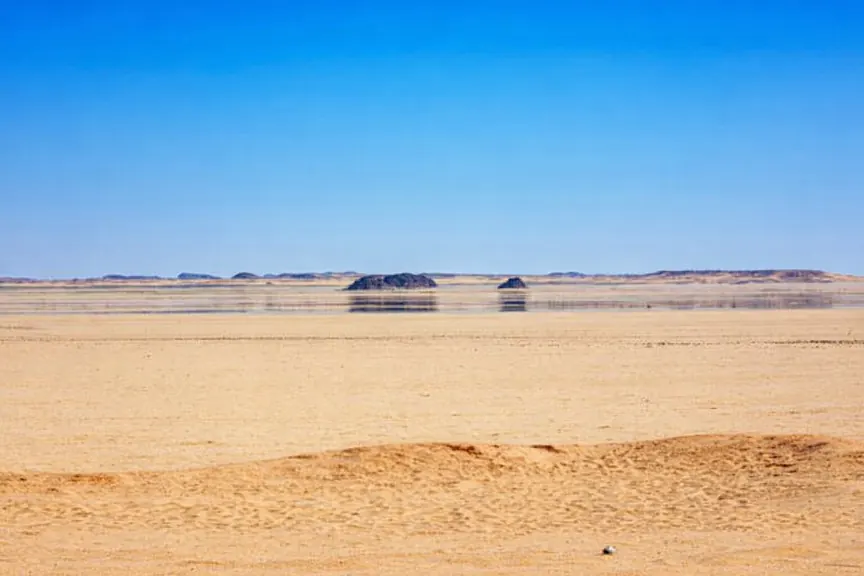
The Court’s verdict provides a Forensic Verdict on the historical trajectory of unchecked momentum in urban expansion. The Vilayati Kikar is a biological invader—a monoculture that isolates itself, outcompetes indigenous flora, and depletes groundwater through excessive evapotranspiration. By ruling that the "mere proliferation of vegetation" does not equate to a natural forest, the Bench—comprising Justices Dipankar Datta and Augustine George Masih—has challenged the unyielding appetite for acceleration that often values rapid, external "green cover" over the internal proportional resilience of a self-sustaining ecological community.
The "where and how" of this transition are critical. The land in question was acquired as agricultural land in 1986 and allotted to the Railways for a new terminal project in 2008. The Court held that the sanctity of the Master Plan must prevail, ensuring that urban planning is not held hostage by the accidental growth of invasive species. This is a move toward a measured coordination of human infrastructure and ecological restoration. The judgment mandates that the project must proceed only with robust safeguards: 20% mandatory green cover, compensatory afforestation, and the prioritized transplantation of indigenous trees.
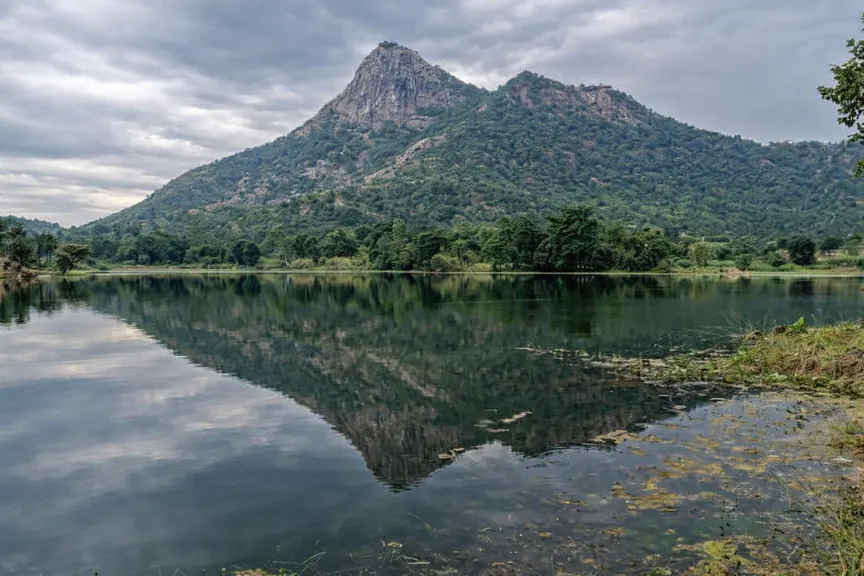
This ruling reflects the definitive logic of a Diagnostic Renaissance. It acknowledges that a true forest is an architecture of integrity, a closed-loop system of internal balance, not just a high-throughput canopy. To save the Aravallis, we must move beyond the compulsion for infinite throughput and instead foster an optimal ground where native grasses, shrubs, and trees can reclaim their rightful place.
The tragedy of the historical trajectory was the blind introduction of exotic species without an understanding of their long-term cost to the ecological metabolism. Today, the law has caught up with the science. The path forward is not found in the unyielding appetite for acceleration, but in a sustained stability that values the vital signs of our ecosystems over the quantity of our greenery.
By cooling the fires of unchecked momentum and focusing on the restoration of native habitats, we can build a future where our urban infrastructure exists in an architecture of balance with the breathing anatomy of the natural world. This is the structural necessity of 2026: ensuring that our "green lungs" are actually capable of breathing.



Discussion 6 comments