


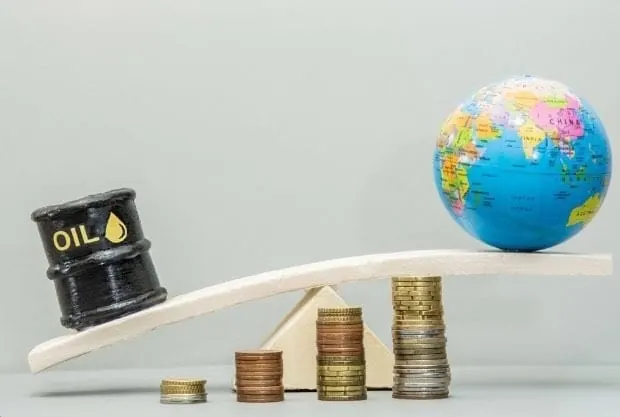
As energy shocks and shifting alliances converge, a restless drive for more is pushing the global system toward a tipping point—and reshaping the quiet reality of everyday life. The global order currently operates under a state of systemic stress that defies traditional geopolitical categorization. As of March 2026, the convergence of triple-digit oil prices, fractured financial markets, and a fundamental realignment of international alliances suggests that the world is no longer dealing with isolated disruptions. Instead, it is witnessing the activation of a multi-friction trap where economic, environmental, and political pressures are so tightly entangled that a tremor in one area triggers a mechanical failure in another. This is not merely a season of high costs; it is a profound, non-linear restructuring of how modern life functions. The primary driver of this instability is the return of the 100-per-barrel energy threshold, which serves as more than a budgetary headache for ministries; it is a foundational tremor. Because energy is the master resource upon which all modern logistics depend, a surge in fuel costs acts as a regressive tax on every level of human activity. It triggers what is increasingly recognized as a domino surge where the initial fall of energy stability knocks into the pillars of global trade, which in turn strikes the cost of essential goods, eventually creating a surging wave of inflation that crashes into the household budget.
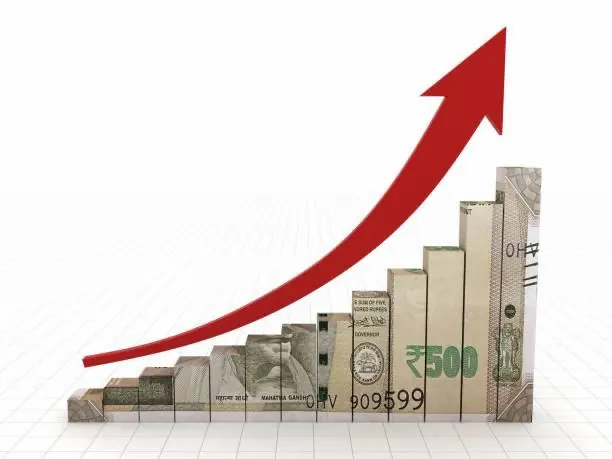
At the core of this mechanical failure lies a deeper, psychological engine: a restless drive for more that seeks infinite expansion within a finite world. For decades, the global order has been fuelled by an insatiable hunger to build faster and cheaper, operating under the dangerous illusion that progress has no natural limit. This obsessive thirst for growth refuses to recognize physical boundaries, treating the Earth’s resources as a bottomless reservoir and its stability as a guaranteed background. When the immediate requirements of a balance sheet are prioritized over the physics of a tipping point, a grand delusion takes hold. Growth is built on a foundation of manufactured invisibility, where risks are not removed but simply pushed into the future to satisfy a momentary hunger for numbers. This surge is characterized by its accelerating momentum. When transport costs rise, the price of fertilizer and seeds follows. As agricultural inputs become expensive, food prices climb. As food prices climb, the average consumer’s discretionary spending—the money left over for clothes, electronics, or savings—simply vanishes.
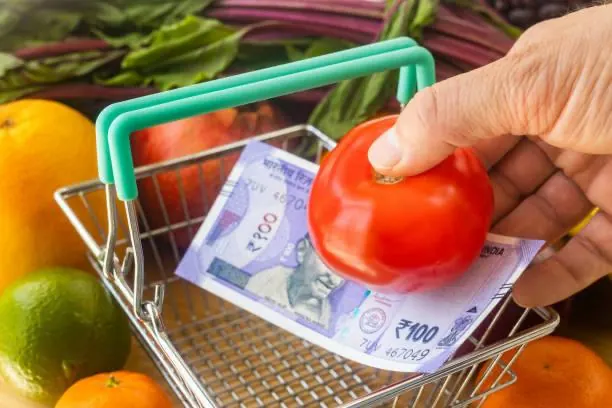
In emerging economies like India, this pressure is particularly acute. As a major energy importer, the nation faces a dual-front war: defending the currency against a hardening dollar while shielding a massive population from this gradual, crushing tightening of essential goods. However, the financial volatility is only the surface of the crisis. Beneath the economic data lies a deeper, more permanent shift in the architecture of the world. The recent strategic pivot between the European Union and Australia is a forensic indicator of a fragmented landscape. Nations are no longer seeking globalism in the idealistic sense of open borders and shared prosperity; instead, they are seeking resilience through localized, hardened alliances. This recalibration is a silent admission by policymakers that the international environment has become harsher—a jurisdictional grey zone where old models of control and prediction no longer hold. We are seeing a move away from efficiency, or getting things from the cheapest source, toward security, or getting things from the safest source. This shift is necessary for survival, but it is also expensive. It adds another layer of friction to the global economy, ensuring that the cheap era of the last thirty years is effectively over.
The tragedy of the current trajectory is its interconnected nature. In this multi-friction trap, an energy shock in one hemisphere reinforces a supply chain disruption in another, which in turn destabilizes a regional currency. These are not parallel events; they are a singular, coiled spring of structural strain, wound tight by the restless drive for more. Traditional news reporting often treats these as separate headlines—oil rises, trade deals are signed, markets fall—but a forensic analysis reveals they are all symptoms of the same systemic fever. For the individual household, this manifests as an atmosphere of persistent uncertainty. The job market becomes more competitive as companies try to lean out their operations to survive the surge. The cost of living erodes savings, and the sense of manufactured invisibility—the comforting illusion that the water will always flow, the lights will always turn on, and the shelves will always be full—finally begins to crack.
This is the moment where the global becomes personal. The pressure on the international stage translates directly into a quiet reshaping of everyday life, where choices about education, health, and travel are weighed with a new, heavy caution. Yet, this moment of systemic stress also functions as a threshold of transition. History shows that systems rarely change when they are comfortable; they change when they are under pressure. As the old growth sectors based on cheap credit and infinite expansion slow down, a new landscape is being forced into existence. Growth is now migrating toward energy transformation, digital resilience, and essential services. For a younger generation, this evolving landscape presents both a threat and an opportunity. The premium is no longer on specialization alone, but on adaptability—the capacity to understand and navigate complex, overlapping systems. Survival in 2026 requires more than technical skill; it requires a systems-thinking approach, where one can see the dominoes before they fall and adjust their path accordingly.
The learning for the modern era is that the world is not merely under pressure; it is being reshaped. The central question facing governments and societies is no longer how to return to normal, for the baseline of the previous decade has been left behind. To navigate the multi-friction trap, the task now is to build an architecture of integrity—a balanced path between reckless expansion and paralyzing fear. True integrity in a system means that it is balanced. It respects the physical limits of resources while maximizing the resilience of human institutions. It moves away from the drive for infinite growth and toward a serene equilibrium where progress is measured by stability rather than speed. This is not a retreat into poverty, but an advance into wisdom. It is the realization that a civilization is only as strong as its weakest link in the domino chain.
The events of early 2026 are the forensic proof that the global system is testing its own breaking point. Whether this period is remembered as a collapse or a turning point depends entirely on the capacity of institutions to move beyond the architecture of denial—the belief that we can ignore the friction—and embrace a more sophisticated, balanced mode of existence. The world is moving; the only choice remaining is whether to be crushed by the shift or to evolve with the majestic and volatile reality of a planet in transition. Only by finding the middle ground between human need and ecological reality can a future of genuine, lasting resilience be achieved. The domino surge is a warning, but it is also a teacher. It tells us that everything is connected, and in that connection, we must find the strength to build anew, cooling the internal fires of expansion to secure a home that endures.





Thanks and regards.