



A ₹5,675-crore project, a ₹56.75-crore affidavit and a tiger-reserve levy that fell from ₹227 crore to ₹2.27 crore: the Tarali affair is not one company’s story but the story of a department, a board, a ministry, a party and a press that all looked away.
Take ₹56.75 crore. Now take ₹5,675 crore. The digits are identical, and only a decimal point separates them. That decimal point is worth ₹224.73 crore to a company and exactly that much less to a tiger reserve.
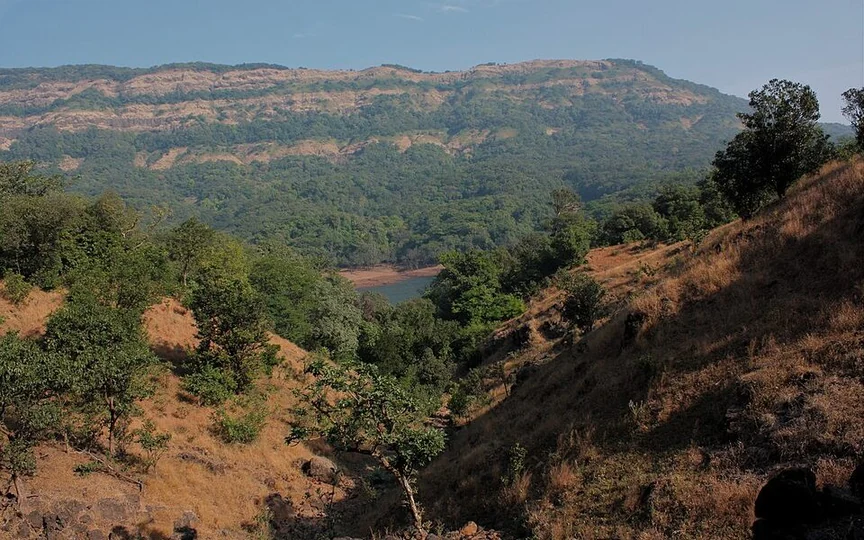
Landscape from the Koyna Wildlife Sanctuary, in Satara, Maharashtra. Credit: Bangal Priti, CC BY-SA 4.0, via Wikimedia Commons.
In March, Maharashtra’s top wildlife official, M. Srinivas Reddy, wrote to Adani Green Energy demanding ₹227 crore for the Sahyadri Tiger Reserve.[1] That was 4 per cent of the ₹5,675 crore at which the Union environment ministry’s February 2025 clearance letter recorded the cost of the 1,500 MW Tarali pumped-storage project in Satara.[2] On September 8, the company filed a notarised affidavit asking that ₹56.75 crore be treated as the project cost.[1][3] A letter from Reddy dated October 12, as reported, said his office had agreed, and asked for one per cent up front: ₹56.75 lakh.[1] The company paid, and the Sahyadri reserve’s field director confirmed receipt.[3] The remaining ₹1.7025 crore waits on the National Board for Wildlife. The total comes to ₹2.27 crore.
Start with the company. It says ₹56.75 crore was only the cost of site investigation and survey, that it appeared in an online proposal, and that the State Board for Wildlife assessed the full ₹5,675 crore anyway.[4] Maybe. But read what was filed. As The Indian Express reported, the affidavit says the figure came from “analogous estimation” and asks that it be treated as the project cost.[1][3] Whatever that number meant on a web form, a notarised affidavit asked the state to treat it as the cost of the project. If the board already knew the true cost, why file an affidavit asking the department to use a lower one? And why does the company’s explanation arrive only in a statement on November 13, the day the story broke, when its spokesperson, National Herald reports, would not answer the specific question put to it?[3][4] The company says it clarified earlier. Where is that clarification?
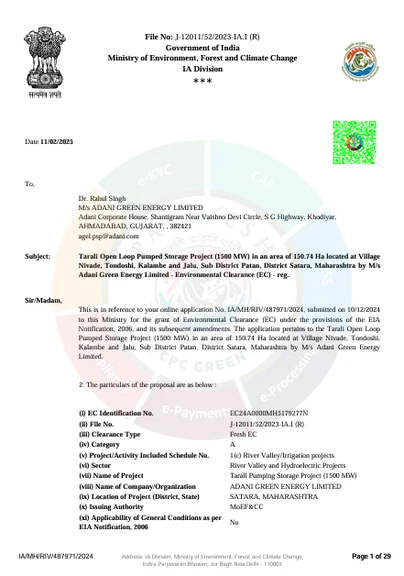
The arithmetic offers no comfort. Spread over 1,500 MW, the affidavit’s ₹56.75 crore comes to about ₹3.78 lakh a megawatt. The Central Electricity Authority estimates the average cost of developing pumped storage at around ₹6 crore a megawatt.[5] Against that national average, the affidavit’s figure is about one-hundred-and-sixtieth, or 99.4 per cent lower. The cost recorded in the Union ministry’s clearance letter, ₹5,675 crore, works out to about ₹3.78 crore a megawatt, which is below that average, and an existing reservoir may explain that. It cannot explain a figure a hundred times lower again.[2] And the environmental management plan in the clearance letter itself, capital and five years of running costs together, totals ₹6,687 lakh, about ₹66.9 crore. That is more than the entire project cost the affidavit sought.[2]
A company can only file a paper. The Forest Department decided what the paper was worth, and its account of that decision has not held still. Reddy’s October 12 letter said his office had agreed to the revised cost.[1] After the story broke, he told Hindustan Times, as The Wire reported, that the department had not accepted the revised estimate and was awaiting the company’s explanation.[6] A department that says yes on paper and no to a newspaper has told us which of the two it would rather defend. Meanwhile ₹56.75 lakh sits in a tiger reserve’s account, calculated on the number he now says he has not accepted. And asked about the affidavit, he directed questions to the company,[3][7] which means the guardian of a tiger reserve told the public to ask the payer why the payer pays less.
Now look at the formula. The State Board for Wildlife, which Chief Minister Devendra Fadnavis heads, set the levy as a percentage of project cost,[1][3] and the department computed it from a figure the payer supplied, though the Centre’s letter already held a different one.[2] A formula like that pays the declarer for declaring low. No public document defines “project cost” for this levy, and no statute or notification has been cited for the 4%. The ₹5,675 crore in the clearance letter is itself an estimate the company submitted.[2] The board imposed fifteen conditions on February 23. No public account of them includes a sixteenth: that the cost be checked against the clearance. Mr Fadnavis, did anyone on your board ask who would verify the number?
The Union ministry has no clean hands either. It holds the ₹5,675-crore figure in its own letter.[2] Rohan Bhate, Satara’s honorary wildlife warden, complained on October 30,[1][3] and the ministry’s direction came on November 6, when it asked the state to investigate on priority.[3] It sent the file back to the department whose decision was the problem, and the state in turn asked the deputy director of Koyna Wildlife Sanctuary to examine it.[3] A sanctuary official has been asked to examine a decision taken by the state’s chief wildlife official. Who expects that inquiry to bite?
The opposition owes an answer too. Congress’s Jairam Ramesh called Tarali a “scandal of gigantic proportions” and renewed the demand for a Joint Parliamentary Committee on the Adani Group.[3][8] Fair politics. But Vedanta Limited was Congress’s single biggest electoral-bond donor, ₹125 crore, according to Business Standard and India TV,[9][10] and Vedanta is behind the Sijimali bauxite mine in Odisha: 1,549 hectares, 699 of them forest, with villagers alleging fabricated gram sabha consent.[11][12] Congress did speak, demanding an inquiry on April 28, three weeks after clashes injured around 70 people,[13][14] and joined an October bandh,[15] though villagers had protested since 2023.[11] A party that condemns a company’s mine while holding its money should say what it intends to do about the money. In fairness, Vedanta gave the BJP far more, a reported ₹227 crore in bonds,[16] so this is no defence of the ruling party. It is a reminder that a JPC on one group cannot answer how any developer’s declared cost gets verified by any state.
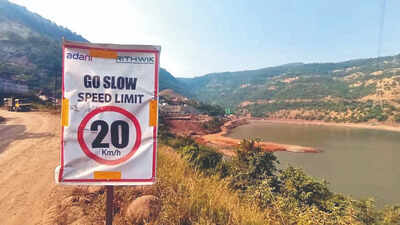
Photo - Collected
The green-energy establishment owes an answer as well. Pumped storage is the battery that makes solar and wind usable, and India needs it. That is exactly why developers, financiers and climate advocates who know better stay quiet when “clean” is used as a discount on ecological cost. A transition that haggles down the price of protecting forests is a bargain for those building it and a bill for everyone else.
And ask what the ₹224 crore was for. This is the Sahyadri Tiger Reserve landscape, where Koyna Wildlife Sanctuary and Chandoli National Park meet. The company says the site is private, non-forest land, 3.2 km from Koyna Wildlife Sanctuary.[4] The state Forest Department says it lies in the deemed eco-sensitive zone.[3] The clearance letter lists the tiger reserve itself at 1.5 km and records that the project “will undergo Wildlife Clearance” from the National Board for Wildlife.[2] On November 13 the department ordered work stopped, saying construction began without that approval.[17] It is still pending. An environmental clearance is not a wildlife clearance, and the clearance letter says so itself.[2]
The press has its own bill to pay. A complaint sat with the authorities from October 30. A ministry letter went out on November 6. The public heard nothing until The Indian Express reviewed the documents and published, and the rest of us followed its lead.[1][3] In a country where most of the press has learned not to ask power its questions, it took one honorary warden with a grievance form and one newspaper with the files to put these papers in front of the public. Most coverage will fade within a week, and the next affidavit will need nothing more than a quiet news cycle.
Five questions follow from the record, and none has been answered in public.
Who authorised the revised valuation? Reddy’s October 12 letter, as reported, said his office had agreed to the ₹56.75-crore figure.[1] He later said the department had not accepted it.[6] Either an officer signed off or no one did. Which officer, on what file noting, and on what basis did ₹56.75 crore replace ₹5,675 crore?
Who verified the project-cost declaration? The levy is a percentage of a figure the payer supplies,[1][3] while the Centre’s clearance letter already held a different one.[2] No published account of the fifteen conditions shows one asking for the two to be compared. Was any officer, at any stage, asked to check the affidavit against the clearance letter, and what did that officer record?
Who is accountable for accepting the payment? The company paid ₹56.75 lakh and the Sahyadri reserve’s field director confirmed receipt.[3] A receipt is not a decision, but the money was calculated on a number the department now says it has not accepted. Who accepted it, under whose authority, and what is that money, in law, while the cost it was calculated on is in dispute?
Why was the inquiry sent back to the department whose conduct was questioned? The Union ministry asked the state to investigate on priority, and the state handed the file to the deputy director of Koyna Wildlife Sanctuary.[3] Who chose that route, and on what reasoning? Who in that chain is placed to examine a decision taken above them?
Will the wildlife clearance be independently examined before construction resumes? The department ordered work stopped on November 13, saying construction began without the National Board for Wildlife’s approval, which is still pending.[17] The clearance letter itself says the project will undergo that clearance,[2] while the company and the state disagree on whether the site lies in the eco-sensitive zone.[3][4] Who will examine this, and will anyone outside the department be asked to?
So here is what the record holds. A company asked that a number one-hundredth of its cleared cost be taken as its project’s cost. A department says yes in a letter and no to a newspaper. A board built a levy that rises and falls with a figure the payer supplies. A ministry that holds the true number sent the file back to the state. A party shouted at Adani while holding Vedanta’s money. The press noticed late, and the people who speak for the green transition said little.
Whatever that number was meant to be, it reached a government file, and the levy computed on it fell by ₹224.73 crore. This is a tiger landscape being priced, and the price was set by the one paying it.
What is a tiger reserve worth when the price is named by the one who pays it? Who answers for a landscape when its guardians send questions to the payer? How many other numbers have moved while no one was looking? And what is a clean-energy transition worth if it asks nature to take the discount?
The decimal point moved once, with the help of a company, a department, a board, a ministry, a party and a press that looked away. You have the numbers. You decide what they add up to.
Sources
-
The Wire, “Adani Slashes Maharashtra Project Cost by 99% in Affidavit, Conservation Dues Shrink by Rs 225 Crore: Report,” 14 November 2026. https://thewire.in/environment/adani-slashes-maharashtra-project-cost-by-99-in-affidavit-conservation-dues-shrink-by-rs-225-crore
-
Ministry of Environment, Forest and Climate Change, Environmental Clearance letter for the Tarali Open Loop Pumped Storage Project (1,500 MW), File No. J-12011/52/2023-IA.I(R), 11 February 2025 (primary document, published by Adani Green Energy Ltd). https://www.adanigreenenergy.com/-/media/Project/GreenEnergy/Corporate-Announcement/Others/Environment-Clearance---Tarali.pdf
-
National Herald, “Congress seeks JPC probe after report flags 99% cut in Adani project’s stated cost,” November 2026. https://www.nationalheraldindia.com/politics/congress-seeks-jpc-probe-after-report-flags-99-per-cent-cut-in-adani-projects-stated-cost
-
ANI via Asianet Newsable, “AGEL rejects allegations over Tarali pumped storage project costs,” 14 November 2026 (Adani Green Energy statement). https://newsable.asianetnews.com/india/agel-rejects-allegations-over-tarali-pumped-storage-project-costs-articleshow-x3f014m
-
PTI via The Week, “Target of 100 GW hydro pump storage needs Rs 5.8 lakh cr investment: CEA report,” 23 January 2026. https://www.theweek.in/wire-updates/business/2026/01/23/target-of-100-gw-hydro-pump-storage-needs-rs-5.8-lakh-cr-investment-cea-report.html
-
The Wire, Report on the Forest Department’s conflicting accounts of the revised cost, citing Hindustan Times, November 2026. https://thewire.in/environment/adani-cuts-maharashtra-project-cost-by-99-forest-official-gives-conflicting-accounts-reports
-
IPA Newspack, “Congress demands Adani inquiry over Satara project valuation,” November 2026. https://ipanewspack.com/congress-demands-adani-inquiry-over-satara-project-valuation/
-
ThePrint (PTI), “‘Scandal of gigantic proportions’: Congress on Adani slashing Maharashtra power project cost by 99%,” 13 November 2026. https://theprint.in/india/scandal-of-gigantic-proportions-congress-on-adani-slashing-maharashtra-power-project-cost-by-99/3097585/
-
Business Standard, “Electoral bonds data: Here’s a list of the biggest donors and beneficiaries,” 22 March 2024. https://www.business-standard.com/amp/elections/lok-sabha-election/electoral-bonds-data-here-s-a-list-of-the-biggest-donors-and-beneficiaries-124032200461_1.html
-
India TV, “Electoral bonds: Vedanta biggest donor to Congress with Rs 125 crore contribution,” 22 March 2024. https://www.indiatvnews.com/amp/news/india/electoral-bonds-vedanta-ltd-biggest-donor-to-congress-with-rs-125-crore-contribution-tmc-bjd-lok-sabha-elections-election-commission-latest-updates-2024-03-22-922721
-
The Wire, “Why Tribes in Odisha’s Sijimali Are Protesting Against a Vedanta-Owned Bauxite Mine,” April 2026. https://thewire.in/rights/why-tribes-in-odishas-sijimali-are-protesting-against-a-vedanta-owned-bauxite-mine
-
The Reporters’ Collective, “Odisha’s road for Vedanta’s bauxite mine.” https://www.reporters-collective.in/trc/odishas-road-for-vedantas-bauxite-mine
-
ThePrint (PTI), “Odisha mining project protest: Congress seeks independent probe; alleges PESA, FRA violations,” 28 April 2026. https://theprint.in/india/odisha-mining-project-protest-congress-seeks-independent-probe-alleges-pesa-fra-violations/2916101/
-
News Arena, “Odisha: Tribals protest Vedanta project in Sijimali, many injured,” 16 April 2026. https://newsarenaindia.com/states/odisha-tribals-protest-vedanta-project-in-sijimali-many-injured/74845
-
The Wire, “Odisha’s Adivasis resist mining despite arrests and coercion,” October 2026. https://thewire.in/environment/odishas-adivasis-resist-mining-despite-arrests-and-coercion
-
Mining Technology, “India’s electoral bonds scheme reveals Vedanta’s link with political parties.” https://www.mining-technology.com/features/india-electoral-bonds-scheme-reveals-vedantas-link-with-political-parties/
-
Business Today, “Maha Forest Dept orders Adani to stop project after wildlife fee was cut from Rs 227 crore to Rs 2.27 crore: Report,” 17 November 2026 (citing The Indian Express). https://www.businesstoday.in/latest/corporate/story/maha-forest-dept-orders-adani-to-stop-project-after-wildlife-fee-was-cut-from-rs-227-crore-to-rs-2-27-crore-report-567743-2026-11-17

সবার আগে আলোচনায় যোগ দিন।