


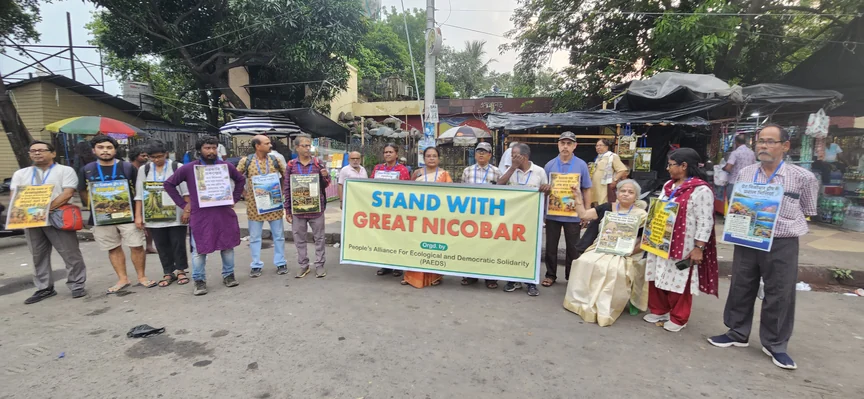
Solidarity sit-in held in Kolkata for the Great Nicobar Island
Kolkata, 22 June 2026
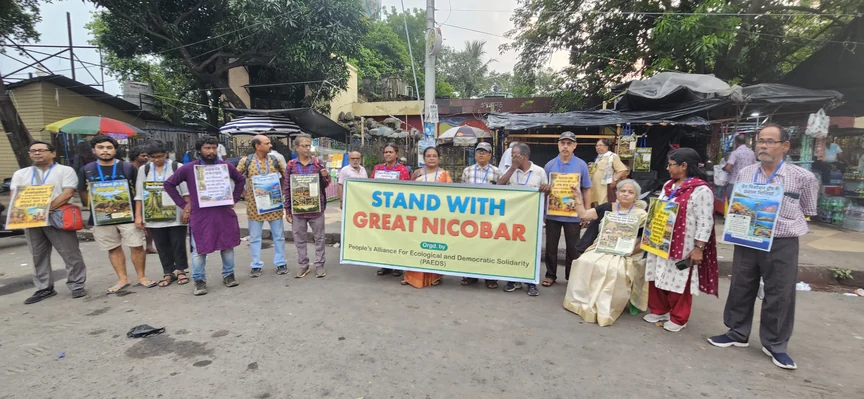
A “Solidarity Sit-in” was held at Y Channel in Kolkata to demand the protection of the ecosystem, biodiversity, and indigenous communities of Great Nicobar Island. The programme was organised by the People’s Alliance for Ecological and Democratic Solidarity (PAEDS). Environmental activists, social and democratic rights activists, cultural workers, and members of the public took part in the gathering.
Speakers at the sit-in alleged that the large infrastructure project being pushed forward in the name of development in Great Nicobar would not affect only one region. They said its impact would be felt across the wider ecosystem, biodiversity, and future generations. The participants called for public opinion to be built against the destruction of nature and the restriction of people’s rights in the name of development.
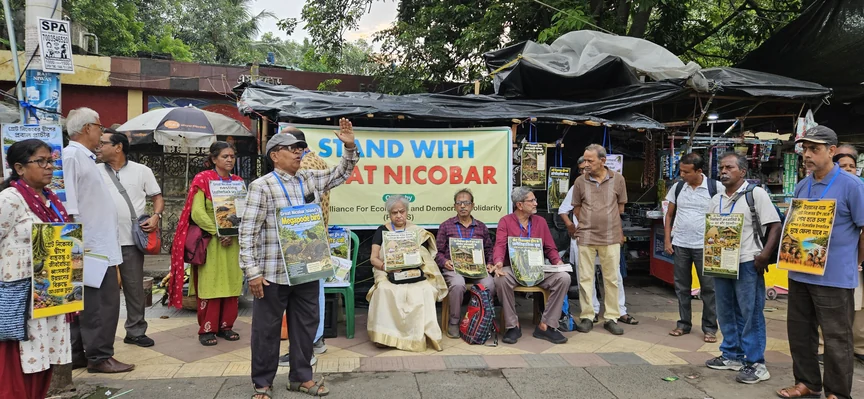
Speaking on behalf of the organisers, participants said that Great Nicobar is not merely a piece of land. It is a unique coastal ecosystem and one of the world’s important biodiversity-rich regions. The island is home to ancient prehistoric forests, coral reefs, leatherback sea turtles, and other marine life, the Nicobar megapode, the long-tailed macaque, and many other rare species. It is also the homeland of indigenous communities such as the Shompen and the Nicobarese, whose lives, culture, and traditions have been closely connected with the island for generations. The organisers said that these natural resources should not be treated only as resources for human use. They have their own existence and right to life.
Speakers said that the lives, culture, and heritage of the Shompen and Nicobarese communities are inseparably linked with the natural environment of Great Nicobar. They stressed that no development plan should be carried out by ignoring the views and rights of these communities. They further expressed concern that the proposed large-scale project could lead to the destruction of forests, loss of biodiversity, damage to the balance of the marine and coastal environment, and serious disruption to the lives of local indigenous communities. The speakers said that the future must not be shaped by domination over nature, but by coexistence with nature.
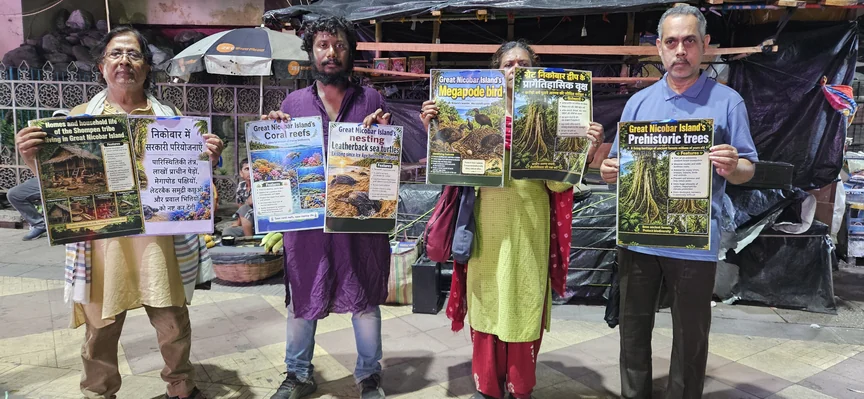
From the sit-in, the participants called for a wider movement to protect the forests, seas, wildlife, and indigenous people of Great Nicobar. They expressed their commitment to building public awareness and a broader people’s movement for environmental justice, people’s rights over natural resources, and the protection of ecological balance.

Be the first to join the discussion.