



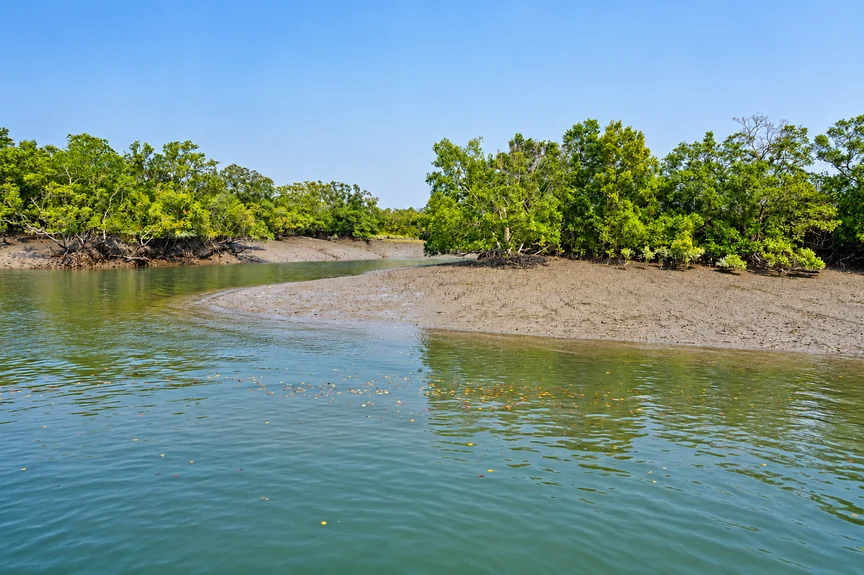
A sweeping plan to lease eight to ten Sundarbans islands to private developers for 99 years is being sold as jobs and conservation. The man announcing it holds an unelected advisory post with ministerial privileges — and personally owns a resort business. No developer has been named. No environmental clearance has been shown. And the tribunal that would eventually judge this project has already ordered a Sundarbans hotel demolished once before.
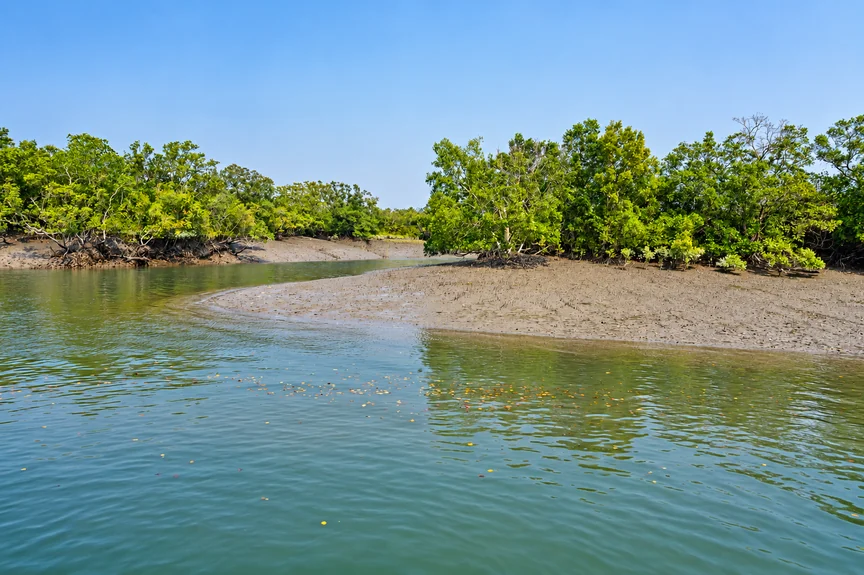
Start with what has actually been confirmed, because it is worse than the single hotel first reported.
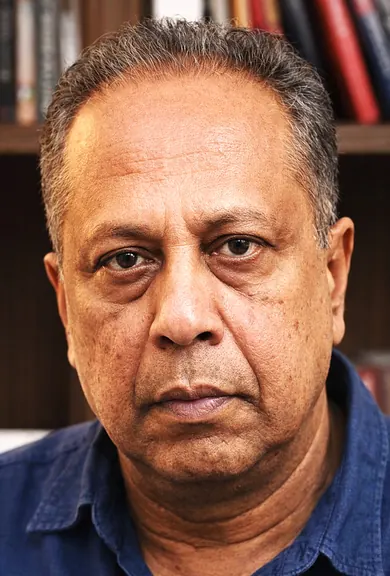
This is not one hotel. It is a policy. BJP leader and actor Mithun Chakraborty — now serving as West Bengal’s Cultural Adviser, a post appointed directly by Chief Minister Suvendu Adhikari with ministerial-level privileges — has announced that eight to ten “pristine, untouched” islands in the Sundarbans will be acquired by the state and leased out to private developers for 99 years under a public-private partnership model, on the condition that whatever is built meets five-star standards. Treehouses. Dolphin safaris by jet boat. Temple beautification. And, buried in the trade press, the real headline: only developers proposing five-star construction will be granted leases at all. Anything less will be turned away.
Ninety-nine years is not a hotel booking. It is a transfer of public common land — inside one of the most legally protected ecosystems in India — into private hands for longer than anyone announcing the deal will be alive to answer for it.
The conflict of interest nobody in the coverage has named:
Chakraborty is not a neutral broker between the public interest and the market. He personally owns a hotel and resort property in Ooty, in the Nilgiri Hills — a business built on exactly the model he is now positioned, by unelected appointment, to expand into one of the world’s most ecologically fragile deltas. That is not incidental biography. A sitting government adviser with ministerial-level privileges, who owns and operates hospitality real estate, is now the public face of a policy that would hand over public island land to hospitality developers on 99-year leases. If this were reversed — a hotelier appointed to write hotel policy in any democracy with a functioning ethics regime — it would trigger a recusal demand within a day. Here, it has been reported as a tourism story.
No developer has been named. No tender process has been disclosed. No financial interest has been declared. The public is being asked to evaluate a land-transfer policy while being shown none of the paperwork that would let it judge whether this is development or self-dealing wearing a conservation label.
The law this policy has already lost to once:
This is not a hypothetical legal risk. It is a tribunal’s actual record.
The National Green Tribunal has previously ordered the demolition of a hotel built in the Sundarbans, after the West Bengal State Coastal Zone Management Authority objected that the construction violated environmental norms — the tribunal’s bench holding that mangroves perform an essential, irreplaceable function in absorbing storm surge and protecting life and property from tidal flooding. This was not a warning. It was an order to tear the building down.
In 2015, the West Bengal Pollution Control Board separately shut fourteen hotels and resorts across the Sundarbans for operating without the pollution-control and coastal-zone permissions the law required. And veteran environmentalist Subhas Dutta — a Kolkata-based campaigner whose decades of litigation helped establish Calcutta High Court’s dedicated environment bench, and who has since been appointed amicus curiae by the NGT specifically on Sundarbans matters — has already said publicly that a project of this kind would be unacceptable, and warned that legal action would follow if it proceeds. Fellow environmentalist Biswajit Mukherjee has pointed out that an almost identical hotel proposal was attempted during the Left Front government’s tenure and died there: rejected by the pollution control board and denied central environmental clearance.
A government proposing to do, across eight to ten islands simultaneously, what a tribunal has already ordered demolished on a single island once, is not proposing something innovative. It is proposing to lose the same case ten times over — unless the goal was never to survive legal scrutiny, but to generate leases and construction before scrutiny catches up.
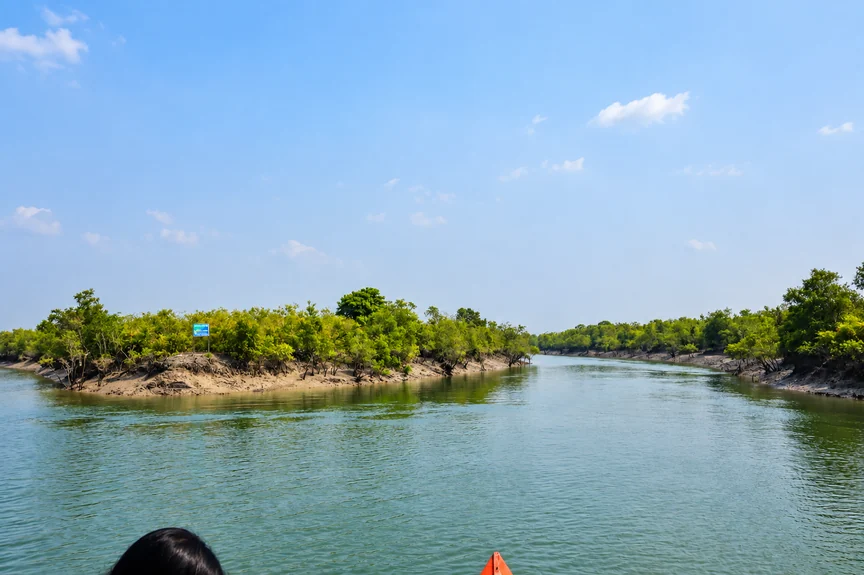
The state’s own ministers do not agree with each other:
The administration is not presenting a united front, and that disunity is itself the story. Sundarban Development Minister Dipankar Jana has said the government will build only on islands where wildlife would not be affected. State Environment Minister Manoj Oraon has said, on the record, that he was not briefed on the specifics of what Chakraborty proposed — while separately conceding that a hotel built inside a forest could cause environmental damage. A government cannot simultaneously claim rigorous environmental screening and have its own Environment Minister admit he learned of the plan the same way the public did.
Answering the government’s strongest defense, point by point.
Fairness requires stating the administration’s case at its best, not its weakest — and defeating it on the record, not by assertion.
“We will only choose islands without forest or visible wildlife.” An island with no forest canopy or tiger sighting is not ecologically inert. The Sundarbans functions as a single tidal hydrological system — its mudflats, root networks and channels do quantified work absorbing storm surge, exactly the function the NGT cited when it ordered a Sundarbans hotel torn down. “No visible wildlife” describes what a site-visit team can photograph in an afternoon. It does not describe what the site does for the delta.
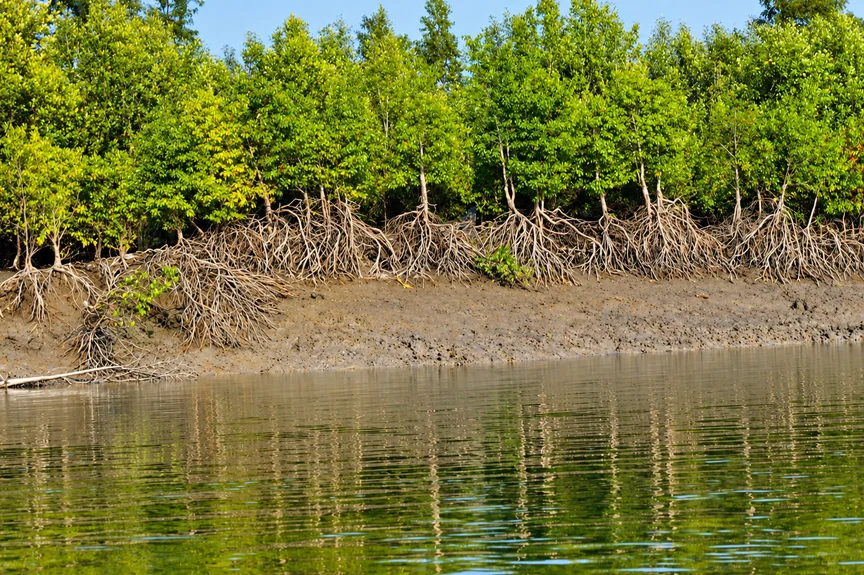
“We are using wood, not concrete, to reduce environmental damage.” Material choice does not touch the actual footprint: freshwater draw, sewage output, boat traffic, and waste generation for a five-star resort exist regardless of what the walls are made of, and none of those figures have been published for even one of the eight to ten proposed sites — let alone all of them at once.
“Seventy to eighty per cent of jobs will go to local residents.” Read the actual figure being reported: each project is expected to generate roughly seventy to eighty jobs, total, not seventy to eighty per cent of some larger local workforce. That is a modest, unquantified local hiring commitment being used to justify a permanent, 99-year transfer of protected public land to private developers who have not even been named yet. The trade is not proportionate to the disclosure.
“This will put the Sundarbans on the international tourism map.” A tribunal has already demolished a Sundarbans hotel once. A pollution control board has already shut fourteen more. A near-identical proposal was already killed for lack of clearance under a previous government. “International map” ambitions did not survive contact with the law the first three times. There is no disclosed reason to believe a ninety-nine-year, eight-island version of the same idea fares differently — except that this time, the person who benefits from hospitality development sits inside the government proposing it.
What “eco-friendly” is being asked to cover for:
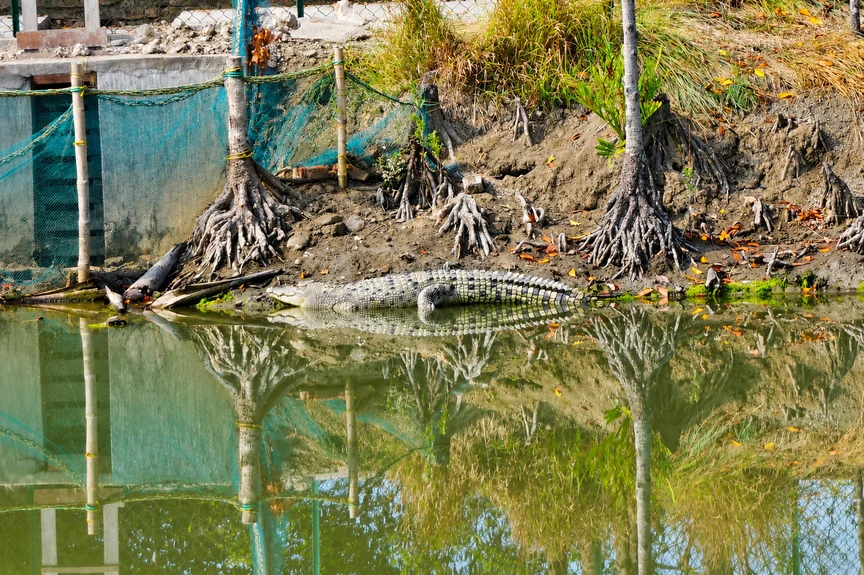
The Sundarbans holds roughly 101 tigers by the 2022 official assessment, with a 2023–24 camera-trapping exercise identifying 105 across the wider landscape — a population that exists precisely because of the ecological integrity this policy proposes to trade away in ninety-nine-year increments, island by island. A conservation pitch that requires routing more boats, more freshwater extraction, more construction traffic and more waste into that population’s habitat, in order to let more paying visitors glimpse it, is not conservation. It is liquidation, marketed as an encounter with nature.
The disclosures owed before a single lease is signed:
Which of the eight to ten islands has an environmental impact assessment even been drafted for? Which developers have expressed interest, and has the adviser structuring this deal disclosed his own hospitality holdings as a conflict of interest? What does the National Board for Wildlife clearance process require, and has it been initiated for any site? What did the West Bengal State Coastal Zone Management Authority — the body whose objection triggered the last demolition order — say about this proposal, if it has been asked at all? And on what evidence, beyond a minister’s assurance that “we will avoid harming wildlife,” should the public believe this attempt survives where the last three attempts on this exact coastline did not?
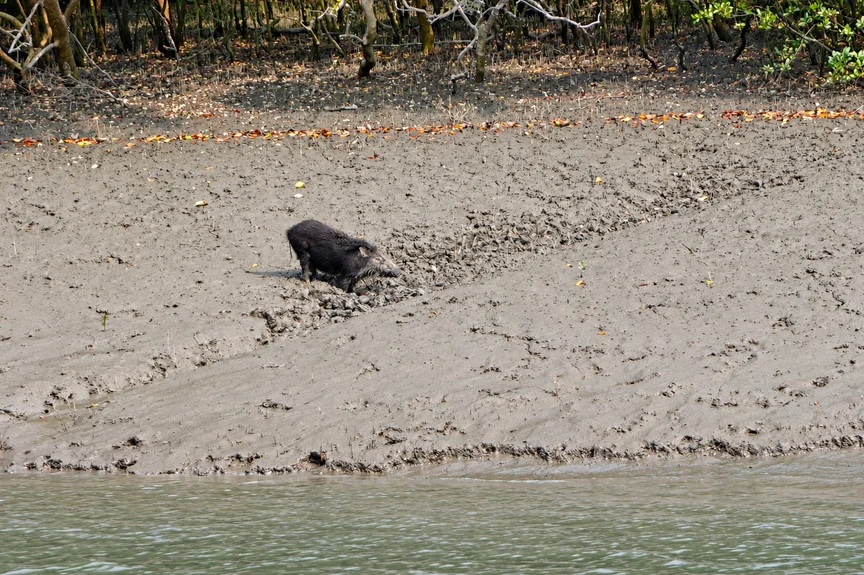
Until those questions are answered on the record, this is not a tourism plan. It is a land-transfer instrument, moving through an ecosystem that has already told two different tribunals what it thinks of this idea — driven by a man whose day job, before he was handed public land policy, was running a resort.
Photo: thedegrowth team
Sources:
ANI, “Mithun Chakraborty announces ‘Tiger Tourism’ plan for Sundarbans, proposes five-star island facilities,” 13 September 2026. https://www.aninews.in/
The Week, “Bengal bets on luxury eco-tourism to put Sundarbans on global map,” 14 September 2026. https://www.theweek.in/news/tourism/2026/09/14/bengal-bets-on-luxury-eco-tourism-to-put-sundarbans-on-global-map.html
National Green Tribunal, Dakshinbanga Matsyajibi Forum v. State of West Bengal & Others / Avishek Paul Chowdhury & Others v. State of West Bengal & Others, proceedings concerning the Sundarbans hotel project and environmental protection, 2022–2023. https://www.greentribunal.gov.in/
Comptroller and Auditor General of India, Report No. 4 of 2021, Government of West Bengal, including findings concerning the Gadkhali Tourist Lodge, CRZ-I restrictions and NGT proceedings. https://cag.gov.in/ag2/west-bengal/en/audit-report/details/115863
National Tiger Conservation Authority, Status of Tigers, Co-predators and Prey in India, 2022, Sundarbans Landscape assessment. https://ntca.gov.in/assets/uploads/Reports/AITM/status_of_tiger-copredators-2022.pdf



Discussion 2 comments