



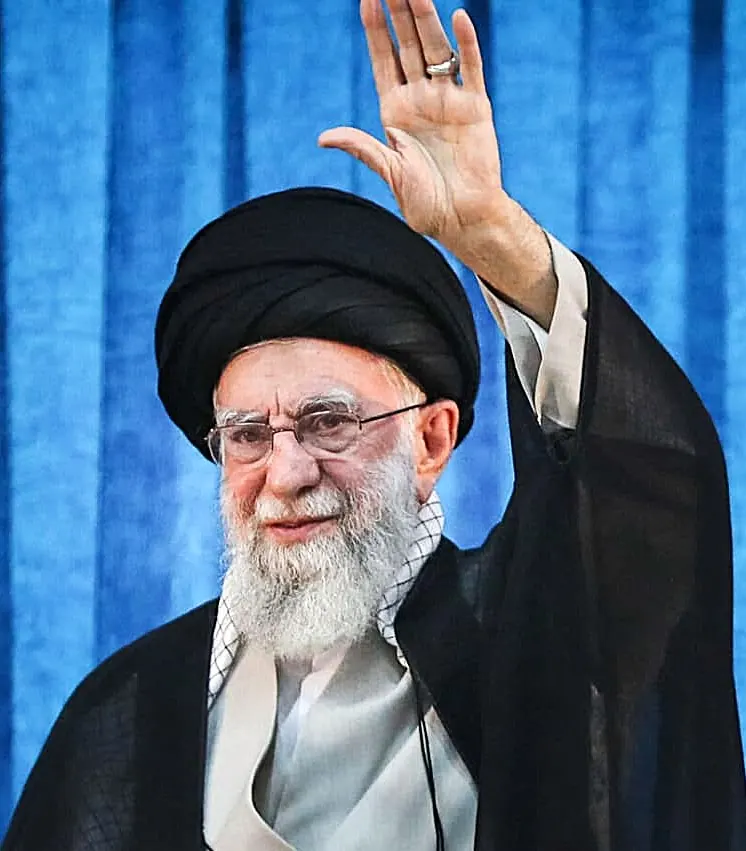
Iranian state media have confirmed that the country’s Supreme Leader Ayatollah Ali Khamenei was killed in a joint Israeli-US attack.
According to official sources, he lost his life at his office in Tehran during the strike. Khamenei, who had led Iran for more than four decades, leaves behind a nation plunged into grief. The government has already declared a 40-day national mourning period. In Tehran and other major cities, mourning processions and gatherings have begun. Political circles in Iran say that Khamenei’s death will have a profound impact on both domestic and regional politics. Under his leadership, Iran had long stood in opposition to Western powers. In a message broadcast on state television, it was said: “Having lost the nation’s spiritual leader and guide, Iran is today immersed in deep sorrow.”
The assassination of Iran’s Supreme Leader Ayatollah Khamenei has significantly heightened tensions across the Middle East to a dangerous level. As a result, this move has transformed a state-level conflict into a broader religious conflict with global implications.
Religious and Regional Impact
U.S.-backed Sunni monarchies such as Bahrain and Qatar face risks of internal collapse. Non-state forces in Iraq and Yemen have directly joined the conflict, putting American troops stationed in those regions in grave danger.
Russia’s Involvement
Reports suggest that Russia has sent MiG-29 and Su-35 fighter jets along with S-400 defense systems to Iran. Since training takes time, Russian pilots are believed to be operating directly in Iran. Beyond weapons, Russia is also supplying diesel and food.
Criticism of U.S. and Israeli Strategy
This incident has deepened distrust toward Western diplomacy, with references to past attacks. Iran has accused the West of deliberately targeting civilians, citing assaults on Iranian girls’ schools as attempts to spread fear. President Trump’s remark about a “four-day war” is being interpreted as a sign of catastrophic regional escalation.
Economic Impact
If the Strait of Hormuz is closed, Europe will immediately face an energy crisis. Iran is preparing for a long-term war, aiming to counter Western military capabilities with cost-effective drones and missile systems.
Conclusion
If current hostilities persist, the situation will evolve into a global catastrophe, leaving devastating consequences for future generations.
The Middle East has descended into a state of total war.
On February 28, 2026, the United States and Israel launched a massive, coordinated "pre-emptive" strike against the Islamic Republic of Iran, ending months of diplomatic posturing and plunging the global community into what experts fear could be the opening chapter of World War III.
The strikes, which the White House characterizes as a necessary measure to ensure regional security, were met with immediate Iranian counter-offensives. Within hours of the initial bombardment, Iranian missiles began striking U.S. military installations across the Persian Gulf, including the al-Udeid air base in Qatar—the largest in the region—and facilities in Bahrain, Kuwait, and the UAE.
The Ultimatum: "Immunity or Certain Death"
In a televised address following the commencement of hostilities, President Donald Trump issued a chilling ultimatum to the Iranian armed forces. "Lay down your arms and receive immunity," the President stated, "or face certain death."
The President explicitly called for the Iranian people to overthrow their government, framing the military action as a liberation effort. However, critics argue the administration has "removed the mask" of liberal interventionism. While previous leaders used the "cloak of rules-based order," the current administration appears to be openly celebrating the use of raw force to reshape the geopolitical map.
A Strategy of "Creative Chaos"
Analysts point to a long-standing strategic blueprint known as "Operation Clean Break" and the "Seven Countries" plan—a Pentagon list revealed decades ago by General Wesley Clark—which aimed to dismantle regional powers including Iraq, Syria, Libya, and finally, Iran.
The current conflict follows the "Syria Model," where years of economic sanctions and support for extremist factions—including controversial figures like Abu Mohammad al-Julani—contributed to the collapse of the Syrian government in late 2024. Now, the U.S. appears to be positioning Reza Pahlavi, the son of the former U.S.-backed Shah, as the head of a "puppet" regime to replace the current leadership in Tehran.
The Nuclear Question and Economic Interests
While Washington justifies the aggression as a counter-proliferation measure, the narrator of the recent developments argues this is "propagandistic nonsense." They point out that:
The Deterrent Factor: If Iran truly possessed nuclear weapons, the U.S. likely would have avoided a direct strike, citing the cautious approach taken with North Korea.
The Energy War: By gaining control over Iran’s vast oil and gas reserves, the U.S. effectively gains a "kill switch" over the Chinese economy, which imports approximately 80% of Iran’s oil exports.
Financial Influence: Allegations have surfaced regarding the influence of major donors like Miriam Adelson, who contributed $250 million to the Trump campaign, allegedly to ensure the Middle East remains an "Israeli sphere of influence."
The "Law of the Jungle"
The shifting of the Department of Defense back to its original name, the Department of War, under Pete Hegseth, is being viewed as an honest admission of the U.S.’s role as a "war-mongering empire." This institutional shift signals the end of international law as a mediating force, replacing it with what observers call the "law of the jungle."
Global Consequences
The human and economic costs are expected to be catastrophic. Iran, a nation of ##93 million people## with a military that has prepared for this specific conflict for fifty years, is a far more formidable opponent than Iraq or Venezuela.
The Oil Spike: Experts warn that the closure of the Strait of Hormuz or the destruction of regional oil platforms could collapse the global economy.
Veterans' Toll: Human rights advocates point to the high suicide rates among U.S. veterans as a grim reminder of the long-term psychological "hidden costs" of such massive imperial undertakings.
As the smoke rises over Tehran and Doha, the world watches to see if Russia and China—both holding deep strategic ties to Iran—will intervene. For now, the message from Washington is clear: in the new world order, only force and nuclear deterrence provide a shield against total aggression.





The analysis of the "Energy War" and Specially, the potential closure of the Strait of Hormuz is particularly vital, highlighting how this conflict could trigger a global economic collapse.
Thanks and regards.