


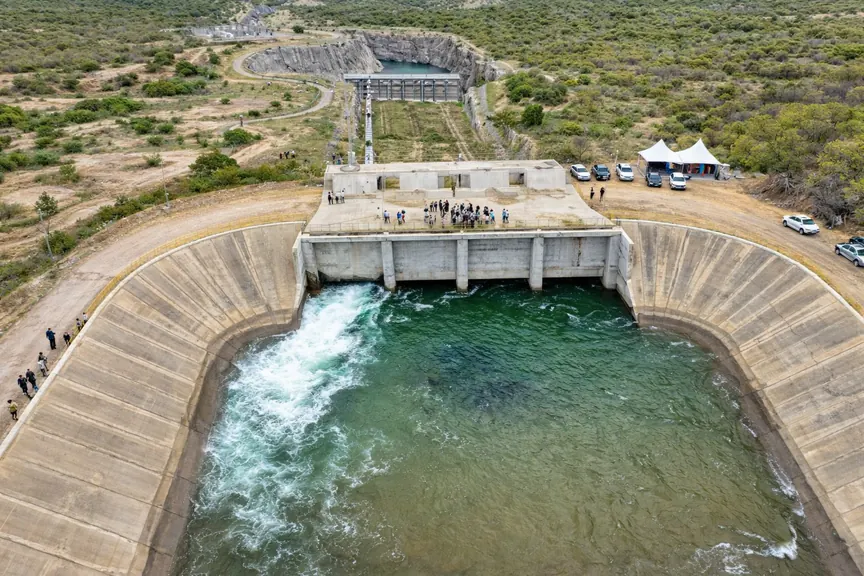
Across the world, governments are betting on one of the oldest engineering fantasies: that rivers can be rerouted, stitched together, and made to flow wherever economic logic dictates. River linking — the large-scale diversion of water between river basins — is presented as the definitive answer to water scarcity. Its proponents speak the language of urgency: droughts, food insecurity, urban thirst. But behind the technical rhetoric lie patterns that repeat themselves with unsettling consistency, from the Ganges plains to the Brazilian sertão, from the Yangtze valley to what remains of the Aral Sea. Economic promises accrue to cities and agribusiness. Ecological destruction accumulates in ecosystems. Human costs concentrate among the poorest, most marginalised communities — who are rarely the ones drinking from the new canals.
Socioeconomic Promises and Their Uneven Realities
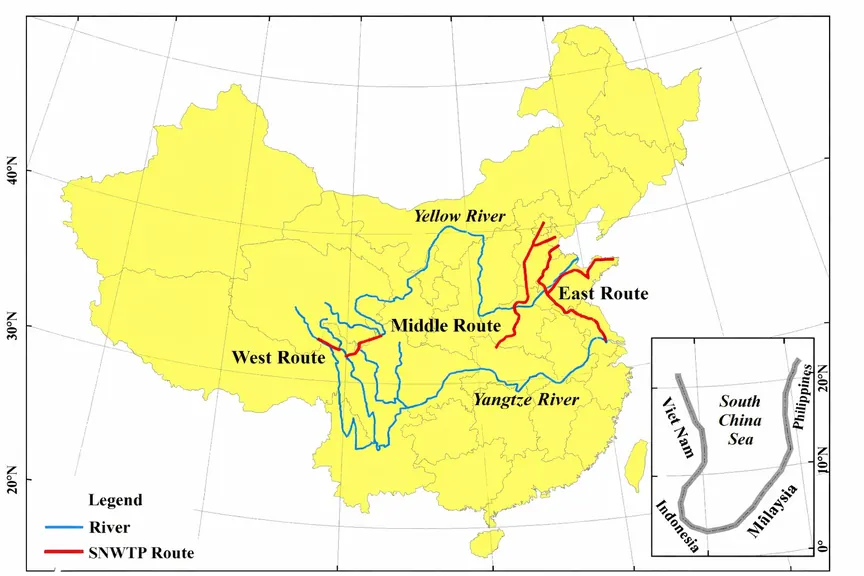
The logic of river linking is seductive in its simplicity: move water from “surplus” rivers to “deficit” regions, and prosperity will follow. China’s South-North Water Transfer Project (SNWTP), operational since 2014, is the most cited success. Its eastern and central routes now supply roughly 9.5 billion cubic metres annually to Beijing, Tianjin, and surrounding provinces, stabilising aquifers depleted by decades of over-extraction and serving around 150 million people [Internet Geography, n.d.]. In northern China, reliable irrigation has sustained wheat and cotton production, reduced drought-driven rural migration, and enabled industrial expansion in regions like Hebei.
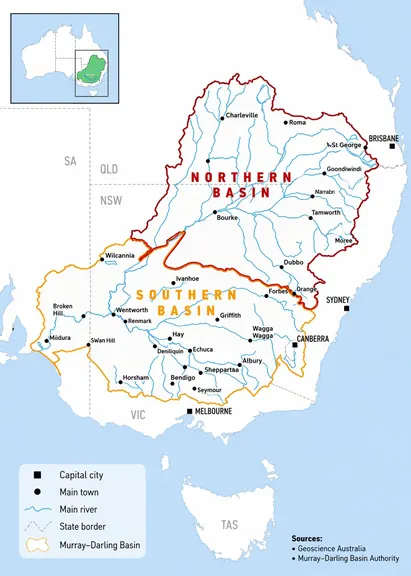
India’s National River Linking Project (NRLP) — still mostly a blueprint — projects even grander returns: irrigation for 35 million hectares, 34,000 MW of hydropower, and relief from the alternating curse of floods and droughts that costs the country billions annually [PMF IAS, 2025]. In Australia, the Murray-Darling Basin system supports around $15 billion in annual agricultural output; in the United States, the Tennessee-Tombigbee Waterway reduced commodity transport costs by 30–50% [Drishti IAS, 2019].
Yet the distribution of these gains consistently follows pre-existing fault lines of power and wealth. China’s project funnelled water and investment towards urban centres; donor basin communities in Hubei and Henan found themselves with less water and little compensation. India’s Polavaram project, a precursor to the broader NRLP, displaced approximately 150,000 people — predominantly Adivasi tribal farmers — with resettlement funds widely reported to have been siphoned by corruption, leaving many as landless labourers earning a fraction of their former incomes [BBC, 2025].
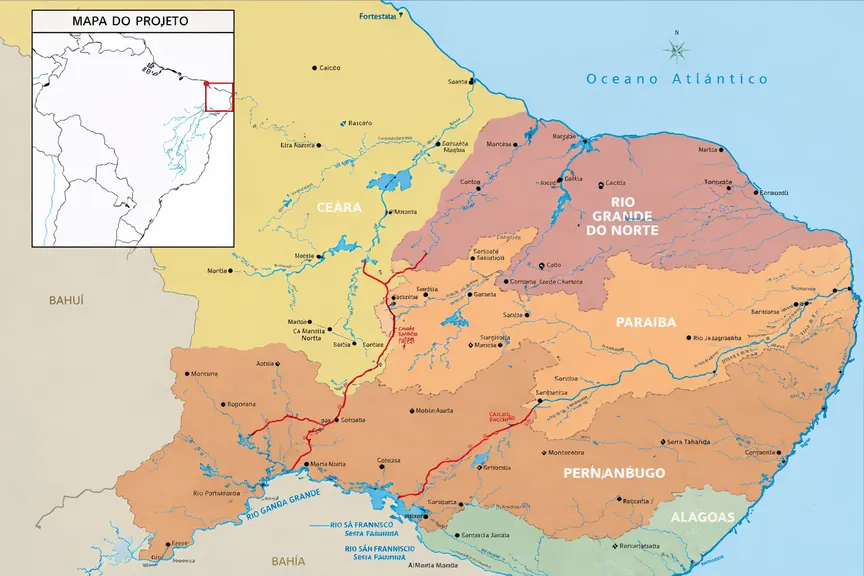
Brazil’s Projeto de Integração do Rio São Francisco (PISF), conceived in the 19th century and finally constructed from 2007 onwards, offers a cautionary parallel. The project — the largest water infrastructure scheme in Brazilian history, stretching 477 km with 13 aqueducts, 9 pumping stations and 27 reservoirs — aimed to deliver water from the São Francisco River to four drought-stricken northeastern states [Wikipedia, 2025]. Yet a 2024 field study published in Land (MDPI) found that displaced families across rural villages in Paraíba and Pernambuco reported profound disruptions to their livelihoods, identity, and access to land, with the governance architecture for equitable water distribution remaining “inadequate and poorly planned” [Pontes et al., MDPI, 2024]. Environmental scientists had warned from the outset that such diversions risk spreading invasive species between historically isolated basins, potentially causing biotic homogenisation — the ecological flattening of distinct river communities into uniform, impoverished assemblages [Vitule et al., Ambio, 2019].
The opportunity cost argument may be the most damning. Independent analyses consistently show that decentralised alternatives — rainwater harvesting, drip irrigation, watershed restoration — can deliver equivalent or superior water security at one-tenth the cost, without the displacement, ecological disruption, or geopolitical friction [Quartz, 2025; Drishti IAS, 2019].
Environmental Disruptions: Rewriting Hydrology
Rivers are not pipes. They are living systems — shaped over millennia into intricate ecologies of sediment, flow, temperature, and biology. River linking treats them as infrastructure, and the consequences of that category error are profound.
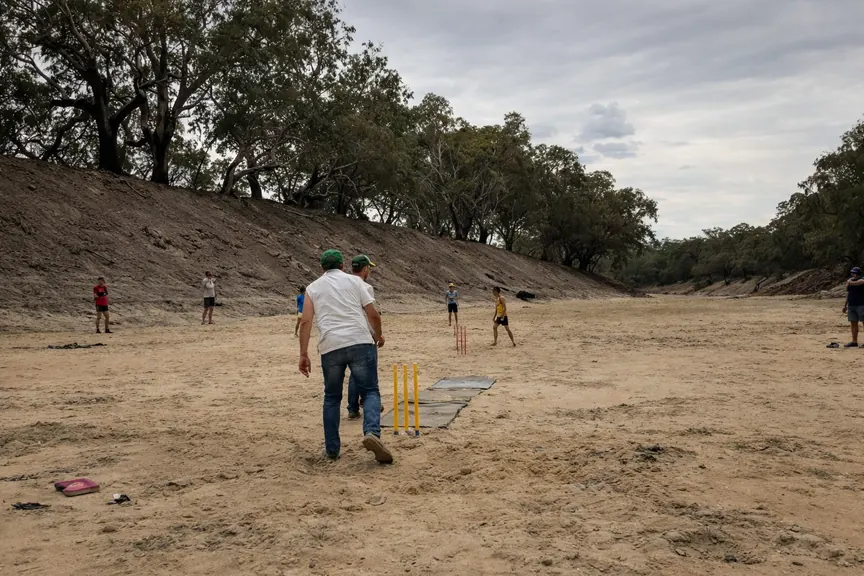
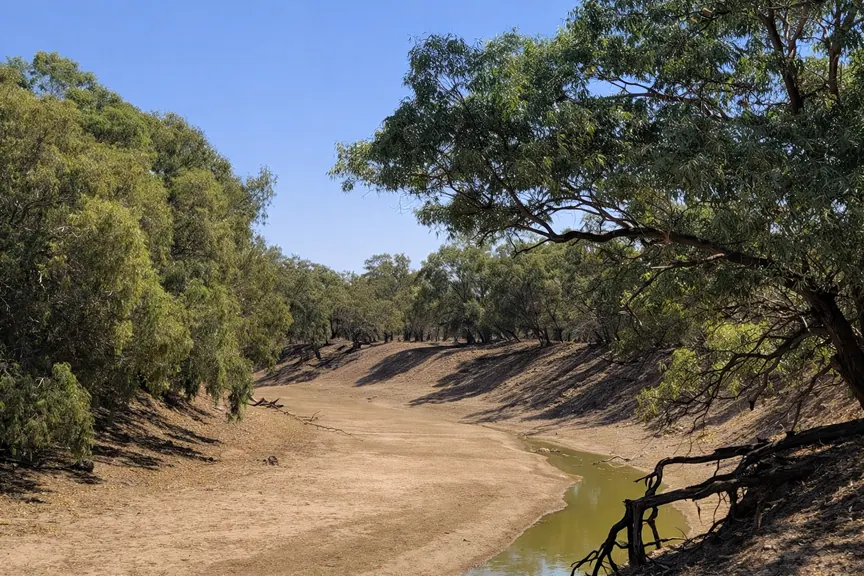
Flow alterations deprive deltas of the sediment that sustains them. Australia’s Murray-Darling diversions have caused the loss of 90% of wetland and mangrove cover in some sections, salinised over 2 million hectares of agricultural land, and triggered repeated fish kills [Bihar PSC Notes, 2025]. China’s SNWTP has transferred not only water but Yangtze pollutants — heavy metals, nitrates, pharmaceutical residues — into cleaner northern basins, triggering algal blooms and disrupting aquatic food webs [Jia, 2025].
The climate dimension is receiving increasing scientific attention. Research published in a peer-reviewed hydrological journal found that India’s proposed river interlinking could suppress monsoon rainfall by 10–20% in donor basins by disrupting land-atmosphere moisture feedback cycles [Chauhan et al., 2022]. In a country where agriculture remains overwhelmingly rain-dependent, this is not a side effect — it is a potential catastrophe written into the project’s own hydrology.
The Ken-Betwa link — India’s first formally approved inter-basin river link — threatens the Panna Tiger Reserve, submerging approximately 9,000 hectares of prime forest habitat for tigers, vultures, and hundreds of plant species, according to environmental assessments [TwoCircles, 2025]. The reservoirs created by large dams are also significant greenhouse gas emitters: methane released from anaerobic decomposition of submerged organic matter contributes meaningfully to national emissions, while open canals in hot climates can evaporate 30–50 billion cubic metres annually — offsetting much of what the diversion was meant to provide [NextIAS, 2025].
The most searing historical lesson comes from Central Asia, where the Soviet Union’s decision in the 1960s to divert the Amu Darya and Syr Darya rivers for cotton irrigation ranks among the greatest ecological disasters in recorded history. Within three decades, the Aral Sea — once the world’s fourth largest lake, spanning 68,000 square kilometres — had shrunk to a tenth of its former size, fractured into toxic saline remnants, and left behind a pesticide-laced desert now called the Aralkum [Britannica, 2023; NPR, 2024]. The port city of Moynaq, once alive with 40,000 people, now sits in sand, surrounded by rusted ships stranded kilometres from any water. As Tajikistan’s UN representative observed, “Every gigantic country has a gigantic idea” — but it is always ordinary people who inhabit the aftermath [UN Chronicle, n.d.]. In 2024, Uzbekistan declared an “emergency regime of water conservation,” while Kazakhstan and Uzbekistan signed a joint ecological cooperation agreement to begin, painstakingly, to restore what remains [Geopolitical Monitor, 2026].
Africa faces comparable risks. The Transaqua project — a proposal to redirect 100 billion cubic metres annually from the Congo River basin to refill the rapidly shrinking Lake Chad — has attracted renewed interest from the African Union and regional governments as a solution to Sahelian drought and Boko Haram-linked instability. Yet research published in Territory, Politics, Governance (2022) warns that such projects are driven as much by geopolitical framing and development narrative as by hydrological evidence, and that the Congo Basin’s own ecosystems — among the most biodiverse on Earth — could be fundamentally altered [Sayan & Nagabhatla, 2022].
Human Costs: Who Bears the Burden?
The pattern is global: the people displaced by river linking projects are rarely the people who benefit from them. They are fishing families, subsistence farmers, tribal communities— people whose relationship with a river is not transactional but existential.
China’s SNWTP required the relocation of 345,000 people, the majority of whom reported inadequate housing and employment post-resettlement; suicide rates spiked in some donor communities following the loss of farmland and community ties [OneYoungIndia, 2024]. India’s NRLP, if fully implemented, could displace between one and five million people, predominantly Adivasi communities whose forest-based livelihoods — honey, mahua flowers, medicinal plants, river fish — cannot be compensated by cash payments and urban relocation packages [Scribd, 2026].
In Brazil, the UN Special Rapporteur on Indigenous Rights found that the São Francisco project was approved without adequate consultation of affected indigenous peoples — including the Truká, Tumbalalá, Pipipã and Kambiwá — in violation of the Brazilian Constitution’s requirement for congressional authorisation before using water resources on indigenous lands [UNSR James Anaya, n.d.]. Approximately 8,000 indigenous people were directly affected, yet the environmental impact study prepared by the government made no mention of indigenous community impacts at all.
The gendered dimension of displacement is consistently underreported. When rivers are diverted and wells dry up in donor communities, it is overwhelmingly women who must walk further to fetch water — sometimes five to seven hours daily — compounding the effects of poverty through lost productive time, physical exhaustion, and reduced school attendance for girls who are conscripted into the task [Scribd, 2026].
Civil Society Rises: From Protest to Policy Challenge
These are not abstract grievances. They are producing some of the most sustained and creative acts of civil resistance seen anywhere in recent years.
In India’s Madhya Pradesh, the Ken-Betwa conflict has become a defining test of whether formal legal protections for tribal communities can survive development pressure. As recently as April 2026, over 5,000 tribal families in Chhatarpur district — construction of the Daudhan Dam now at full pace — entered their eleventh consecutive day of protest, with tribal women standing chest-deep in the Ken River in a demonstration they called the ‘Panchtatva Movement’ (movement of the five elements), invoking the sacred relationship between their communities and the natural world [ANI, 2026; Free Press Journal, 2026]. Earlier protests involved women and children lying on symbolic funeral pyres — the ‘chita andolan’ — a Gandhian act of political theatre that communicates, with devastating clarity, the choice being forced upon them: displacement or death. Twenty-four villages are directly affected; eight will be submerged entirely [NewsGram, 2026].
Activist Amit Bhatnagar, leading the Jai Kisan Sangathan, has framed the struggle explicitly around constitutional rights and forest law, citing a Madhya Pradesh High Court ruling on forest rights that the project administration has yet to implement [Down to Earth, 2026]. Courts have periodically halted phases of construction; NGOs such as the South Asia Network on Dams, Rivers and People (SANDRP) have filed extensive environmental impact assessments exposing procedural and scientific flaws in project approvals [BBC, 2025].
Australia’s Murray-Darling Basin provides a rarer example of civil society achieving a genuine policy reversal. A coalition of farmers, environmental groups, and Indigenous Australian communities successfully lobbied for legally binding extraction caps, and the subsequent “Buyback” programme has restored some 2,000 gigalitres of water to environmental flows [Drishti IAS, 2019]. The US Klamath River dams — whose diversions devastated salmon runs for over a century — were demolished between 2023 and 2024 in what became the largest dam removal in American history, following sustained pressure from the Yurok and Karuk tribes [International Rivers, 2024].
In Latin America, Bolivia, Colombia, and Brazil have all seen grassroots water democracy movements resist the commodification of rivers. Bolivia’s unresolved struggle for a new ‘Water for Life’ framework law, stalled since 2011, reflects the same structural tension visible everywhere: the interests of extractive industries and large-scale agriculture on one side, and community-based water governance on the other [Transnational Institute, 2025]. Uruguay’s 2023 water protests — sparked by a severe drought and the government’s prioritisation of corporate water users — crystallised under the slogan No es sequía, es saqueo: “It is not drought, it is plunder” [Mongabay, 2023].
Towards a Different Calculus
The global ledger of river linking is increasingly difficult to balance in favour of the megaproject. Costs inflate — India’s NRLP estimate has ballooned from $168 billion to potentially $500 billion — while the socioeconomic benefits flow predictably towards those already connected to power, infrastructure, and capital [Quartz, 2025]. The ecological damage, meanwhile, is often irreversible on any human timescale.
This does not mean that water scarcity is not real, or that the communities suffering from drought do not deserve urgent attention. It means that the question “how do we move water?” should be preceded by a harder one: “who decides, and who bears the cost?” The Aral Sea answers that question with 68,000 square kilometres of silence.
Policymakers, under sustained pressure from civil society, are beginning to hear it. The path forward requires mandatory free, prior and informed consent (FPIC) for all affected communities; rigorous, independent environmental impact assessment before — not after — construction begins; hard legal limits on reservoir size and basin extraction; and genuine investment in alternatives: drip irrigation (which can reduce water consumption by 40%), watershed restoration, crop diversification, and decentralised rainwater harvesting [Drishti IAS, 2019; IJRPR, n.d.].
Rivers are not surplus. They are the circulatory systems of living landscapes, and the communities that depend on them are not development obstacles — they are its intended beneficiaries. When that logic is reversed, what gets engineered is not water security, but injustice. The day policymakers understand that truth, perhaps they will stop seeking engineering solutions in river water and start seeking justice instead.



যা কেবল বাঁধ দিয়ে প্রবাহ আটকে divertion এর কথা বলে। জল আটকে বিদ্যুত উৎপন্ন করে এটাই শেখায়, কোনোদিনই পুরো নদী যা কিনা চাষ ও বাসের আতুর ঘর সেদিক শেখায় না।
নদী টিকে টুকরো টুকরো করে ভাবতে শেখায় সম্পূর্ণ করে নয়। তাই এরা বলে নদীর জল প্রবাহিত হয়ে সমুদ্রে মিশে যাওয়া মিষ্টি জলের অপচয়।
দুর্দান্ত লেখা