



Bengal Doubted 60 Lakh Voters. Judges Cleared Over 32 Lakh. Who Decided?
Software flagged them, hearings doubted them, and tribunals now hold their appeals. Two of the Election Commission’s three members say they were not told what was being done in its name. Ask the Commission who decided, and it answers with one word: unanimous.
Masooda Bibi stitches buttons on garments in Metiabruz for about two hundred rupees a day. Her name was deleted from the voters’ list. Her husband’s was not. Jasmine Khatun, 22, of Moyna, was still under adjudication in the last week of April, which meant she could not even approach a tribunal; she said she did not know what to do. Ask the Election Commission who decided that they, and 60 lakh like them, would be doubted, and its reply is that its major decisions were unanimous. That is not an answer. It is the absence of one.
A spelling is not a suspect
Bengal invented a category for its doubts: “logical discrepancies.” A voter could land on the list because the age gap between voter and parent was under 15 years or over 50, and 1.25 crore names were on it. Others landed there because a name was spelt differently across documents, or because one person appeared as the parent of more than six voters. About 60 lakh were still under adjudication when the final roll appeared on February 28, and judicial officers had to rule on them.
Some cases were plainly the system’s own failure. Cricketer Richa Ghosh, then touring Australia with India’s women’s team, and her sister were placed under adjudication although both parents were on the final list. The state’s electoral chief said her name had been found unmapped even though her relatives had submitted documents. If that can happen to a famous family, what happened to Masooda Bibi?
Then the verdict. On the Commission’s own published list, more than 32 lakh of the 60 lakh were found eligible and nearly 27 lakh ineligible. Among those still doubted after the hearings, the doubt was wrong more often than it was right, and the correction fell on the doubted. The Wire argues that many of the ineligible fell into the trap because Bengali and Arabic-Persian names have no standard spelling in English. A matching system that stumbled on spelling was allowed to put a citizen’s vote in question, and the citizen was ordered to prove she was herself.
Where the doubt fell
The Wire’s analysis of the Commission’s data found that five districts with large Muslim populations accounted for about 59 percent of those placed under adjudication. It also reports that Nadia deleted nearly eight in ten of the voters flagged there. That does not show intent. It shows a pattern that demands an explanation, and the Commission’s word “unanimous” is not one.
A right on a calendar
About 34 lakh appeals went to 19 tribunals, each handling more than a lakh. The Supreme Court called the right to remain on the roll “not only constitutional but sentimental,” and declined interim relief. Voters cleared by tribunals before April 21 could vote in the first phase, on April 23, and before April 27 in the second. A right that runs on a tribunal’s calendar is not a right. It is a raffle.
South First reports that in 49 of Bengal’s 294 constituencies, deletions exceeded the winning margin, though only a little over half of those seats went to the BJP. That proves nothing about who won or lost by it. It proves this was not a rounding error. Last week the Commission told the court that 38 lakh appeals were still pending.
Who filed the appeals?
Of those 38 lakh, 22.21 lakh came from deleted voters seeking restoration. Another 16.10 lakh were filed against voters the judges had included, seeking their deletion. The Commission did not say who filed them.
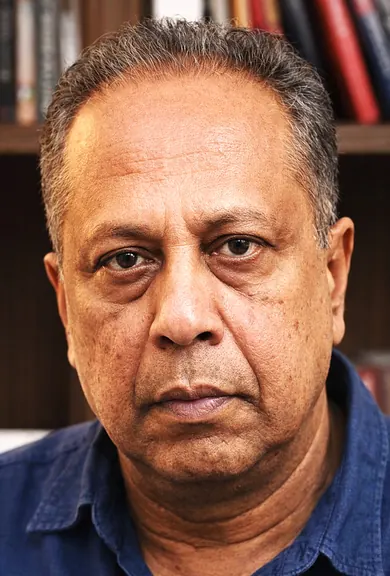
Sandhu asked exactly that. According to the report, he wrote: who was authorised to file these appeals on behalf of the Commission, and by whom? He recorded that neither he, nor Joshi, nor Bengal’s own Chief Electoral Officer had been told the basis or the process. The reporting does not say how many of the 16 lakh came from the Commission. But consider what it means if any did: an institution asking tribunals to strike off people whom judges had already cleared, without telling two of its three members or the state’s electoral chief.
Ninety-seven
Goa shows the same machine failing on a small scale. After a Supreme Court order, local officers heard voters flagged for the same logical discrepancies and found 97 eligible. The software had no way to record their decision. Between February 11 and 17, Goa’s electoral office wrote eight times to the Commission seeking a rollback option, copying its IT chief each time. Nothing came before the final roll was published, and The Indian Express found all 97 names still missing.
Eight letters in seven days, from officers doing what a court ordered, met silence. We do not know whether Bengal’s 60 lakh hit the same wall. The Commission does. It has not said.
Who was told?
Sukhbir Singh Sandhu and Vivek Joshi objected at least 14 times in ten months, four on a single day, to decisions taken without their knowledge. Section 18 of the 2023 Act requires business to be conducted unanimously as far as possible and, where members differ, by majority. Two of three form a majority, so a chief who did not consult them was not leading a collegium. He was preventing one from forming.
The Commission says its major decisions were approved by all three. Perhaps. But nobody alleges they failed to agree on beginning the SIR. The allegation is that particular orders went out without two commissioners being told. It is the difference between approving a war and reading every order issued in its name.
The grandparent question
In July the online Form 6, which registers new voters, was changed to ask applicants whether they, their parents or their grandparents appeared in the last SIR roll. Applicants could not proceed without answering. Joshi had recorded in May that the rules would first have to be amended. Sandhu called the change “unauthorised and illegal” and demanded its removal. It was made despite their objections. The entrance to the electorate was rebuilt by editing a web page.
The executive at the door
Sandhu also recorded that state officials said they lacked full access to the electoral-roll portal, and that the Commission’s IT chief has no legal authority to restrict what the law gives statutory officers. Then he and Joshi wrote separately to the Cabinet Secretary, T.V. Somanathan, over a work allocation order that stripped oversight from the IT division, a step the report calls unprecedented.
An institution built to stand apart from the executive found two of its three members petitioning the executive’s senior-most bureaucrat about their own chief. People do not go outside an institution when the inside works. And Parliament’s 2023 law removed the Chief Justice from the selection panel. If the institution is trustworthy, why remove the neutral check? If it is not, why remove it?
The rest of the room
Nobody else comes out better. Congress leaders have called the Chief Election Commissioner a BJP plant and his conduct treason. Nothing in the documented record supports words like that, and they hand the Commission its favourite reply: this is politics. The BJP’s reply is worse. Reciting past commissioners appointed under Congress governments restores no voter. The Trinamool claimed credit when the Court arranged supplementary rolls, though allegations against officers on both sides are what led the Court to hand adjudication to judges. The Court itself upheld the SIR, praised the right to vote, refused interim relief, and let the election proceed on a roll under appeal. Judicial review that arrives after the election is a post-mortem. And Sandhu and Joshi deserve credit, and a harder question: dissent that stays inside the building protects the dissenter, not the voter.
The best case, answered
The Commission’s defenders have real arguments. By The Wire’s count, about 65 lakh of Bengal’s 91 lakh removals were the dead, the shifted, the absent and duplicates. The Court upheld the SIR. Bengal’s 2002 roll did contain real irregularities; officials found the fathers’ names mismatched for some 85 lakh voters. A written objection is not proof that a decision lacked approval. All true, and none of it answers the charge. Nobody disputes that rolls need cleaning. The charge is that citizens were made to answer for the state’s own paperwork, through a process the law does not describe, on software that overrides the officers the law empowers.
What now
Publish the 14 objections and the replies. Say who authorised the appeals filed for the Commission in Bengal, and how many there were. Publish, state by state, how many restorations officers ordered and the software refused. Put the 97 back. Require all three commissioners to approve any change to ECINet or a statutory form.
Then the harder part. If the documents bear out what The Indian Express has reported, Gyanesh Kumar should not be allowed to answer with the word unanimous and carry on. A Chief Election Commissioner who runs a three-member body as a one-member one has abandoned the office’s central duty, and the honourable course is to resign. If he will not, those with the power to remove him should say why. That is a conclusion from the reported record, not a verdict, and the documents, once published, would settle it within a week.
A voter never sees the Commission’s minutes. She sees her name on a list, or she does not. Masooda Bibi’s husband stayed on the roll. She did not. Every voter rightly deleted deserves a clean roll. Every voter wrongly deleted deserves an apology and a vote. And every citizen is owed an answer to the question this whole affair keeps asking in the passive voice. Who decided?
Primary-document priority: the underlying ECI orders, the 14 recorded objections and replies, the relevant commissioners’ letters, the Supreme Court orders, and the statutory provisions cited in the article should be consulted alongside the published reporting wherever those documents are publicly available.
Sources:
- The Indian Express, “Election Commission SIR: 14 objections,” 23 Sept 2026.
- All India Radio, “EC releases full voter list under judicial review in West Bengal,” 7 Apr 2026.
https://www.newsonair.gov.in/ec-releases-full-voter-list-under-judicial-review-in-west-bengal
- All India Radio, “ECI Revises Voter List, Removing Over 91 Lakh Names in West Bengal,” 8 Apr 2026.
- All India Radio, “SC directs ECI to display names of voters under logical discrepancies,” 19 Jan 2026.
- All India Radio, “ECI sets up 19 Appellate Tribunals in West Bengal,” 21 Mar 2026.
- All India Radio, “Massive Irregularities Found in 2002 West Bengal Voter List,” 13 Dec 2025.
https://www.newsonair.gov.in/election-commission-flags-major-anomalies-in-west-bengal-voter-list
- SCC Online, “West Bengal SIR: SC order on voter appeals,” 17 Apr 2026.
- Business Standard, “SC seeks status of appeals against West Bengal SIR voter deletions,” 11 Aug 2026.
- NewsGram, “Supreme Court Declines Interim Relief for Deleted Voters in Bengal,” 13 Apr 2026.
- South First, “’Special Intensive Rigging’: Opposition seeks removal of CEC Gyanesh Kumar,” 23 Sept 2026.
- Siasat, “ECI commissioners raise 14 objections in 10 months over SIR, Form 6,” Sept 2026.
https://www.siasat.com/eci-commissioners-raise-14-objections-in-10-months-over-sir-form-6-3546890/
- The Economic Times via inkl, “Gyanesh Kumar CEC controversy explained,” Sept 2026.
- The Federal, “ECI’s internal dissent: What does the law say, and what happens next?” Sept 2026.
https://thefederal.com/category/news/election-commission-rift-sir-objections-257494
- The Tribune, “Gyanesh Kumar assumes charge as CEC; Vivek Joshi as EC,” Feb 2025.
https://www.tribuneindia.com/news/india/gyanesh-kumar-assumes-charge-as-cec-vivek-joshi-as-ec
- Deccan Herald, “Ex-bureaucrats Sukhbir Sandhu, Gyanesh Kumar named election commissioners,” Mar 2024.
- The Wire, “West Bengal SIR: Final Electoral Roll Shows 60 Lakh Voters in Legal Limbo,” 1 Mar 2026.
- The Wire, “Nearly 89 Lakh Names Removed: Five Takeaways on the Bengal SIR’s Brutal Math,” Apr 2026.
- The Wire, “In Bengal SIR, ‘Logical Discrepancy’ Became the Election Commission’s Alibi,” 20 Apr 2026.
- The Diplomat, “Voices Erased: Meet Bengal’s Deleted Voters,” Apr 2026.
https://thediplomat.com/2026/04/meet-some-of-the-voters-deleted-from-west-bengals-electoral-rolls/
- The Quint, “Deleted Voters, Supreme Court Order and West Bengal Polls,” 25 Apr 2026.
https://www.thequint.com/news/politics/west-bengal-sir-tribunals-supreme-court-order-adjudication
- National Herald, “Final list not ‘final’ in Bengal as ECI keeps 60 lakh voters ‘under adjudication’,” 2 Mar 2026.

সবার আগে আলোচনায় যোগ দিন।