



Introduction:
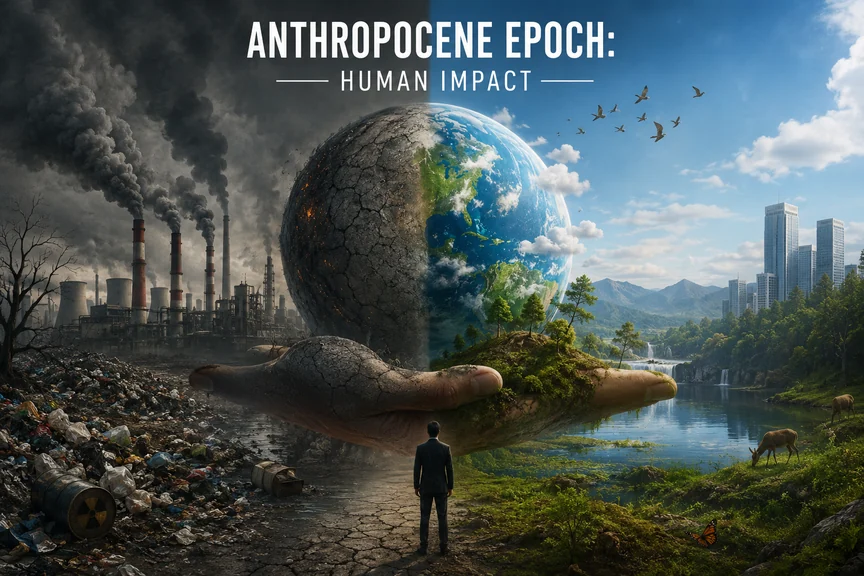
The Anthropocene is one of the most important conceptual developments in Earth System Science in the 21st century. This proposed geological epoch refers to the period when human activities have emerged as the dominant influence on climate and the environment, fundamentally altering the Earth's geological, atmospheric, hydrological, and biological systems. Understanding the Anthropocene is extremely important for environmental professionals because it provides a framework for understanding the unprecedented scale and depth of human-induced environmental impacts and highlights the urgent need for sustainable practices.
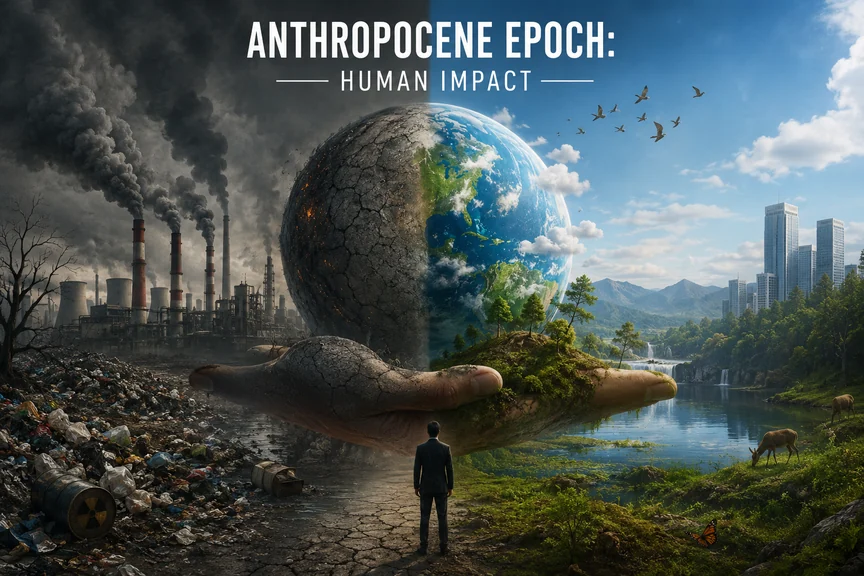
The term "Anthropocene" was popularized in 2000 by Nobel Prize-winning atmospheric chemist Paul Crutzen and marine biologist Eugene Stoermer, although the concept had been developing within scientific circles since the 1990s. This epoch designation suggests that human influence has become so profound that it will leave a permanent imprint in the stratigraphic record of the Earth, much like past mass extinctions or climate change events.
Historical Development and Scientific Basis:
The Anthropocene concept emerged from the realization that human activities are causing layered environmental changes on Earth. In their 2000 paper, Crutzen and Stoermer argued that the impact of human behavior had grown so extensive that it should be recognized as a new geological epoch.The scientific basis of this concept is built on evidence from multiple disciplines, including atmospheric chemistry, climate science, geology, and ecology.
Major Indicators:
Changes in Atmospheric Composition: Before the Industrial Revolution, atmospheric carbon dioxide levels were about 280 ppm. By 2023, they had risen to more than 420 ppm, the highest level in the last 3 million years.
Global Warming: The Earth's average temperature has increased by about 1.5°C.
Loss of Biodiversity: The current extinction rate is 100 to 1,000 times higher than the natural background rate.
Biogeochemical Changes: Humans have profoundly altered the nitrogen, phosphorus, and carbon cycles.
Defining the Time Boundary
There is scientific debate regarding the starting point of the Anthropocene. The Great Acceleration (1950s) is the most widely accepted starting period.
Characteristics:
Radionuclides from nuclear testing; Spread of plastics; Industrial pollution; Rapid increase in greenhouse gases.
Alternative Starting Points:
Industrial Revolution (1800s); Agricultural Revolution (8,000–10,000 years ago); Columbian Exchange (1610); Environmental Indicators and Evidence.
Climate Impacts:
Rising temperatures; Increased frequency of extreme weather events; Melting glaciers and polar ice.
Biogeochemical Changes:
Alteration of the carbon cycle; Nitrogen pollution; Phosphorus-induced water pollution
Biodiversity:
Large-scale species extinction; 75% of land altered by human activities.
New "Human-Made" Ecosystems:
Geological Markers; Changes in stratigraphy; Isotopic signatures; Spread of technological minerals.
Formal Recognition and Debate:
The Anthropocene Working Group (AWG) has been working on this issue since 2009.
Criteria:
Global evidence; Permanent markers; Significant change; Identification of a "Golden Spike".
Current Status:
As of 2023, it remains in the process of formal recognition.
Criticisms:
The time period is too short; Uncertainty about whether the changes are permanent; Anthropocentric perspective; Political implications.
Implications for Environmental Management:
Scientific Implications- The idea of a "natural state" becomes weaker; Importance of tipping points; Need for interdisciplinary research
Management Challenges:
Managing novel ecosystems; Climate adaptation; Local versus global problems.
Policy Dimensions:
Global cooperation; Intergenerational justice; Environmental justice.
Future Prospects:
Possible Pathways- Current trajectory: 3–4°C warming; Technology-driven solutions;
Fundamental transformation:
Emerging Challenges- Geoengineering; Space activities; Synthetic biology.
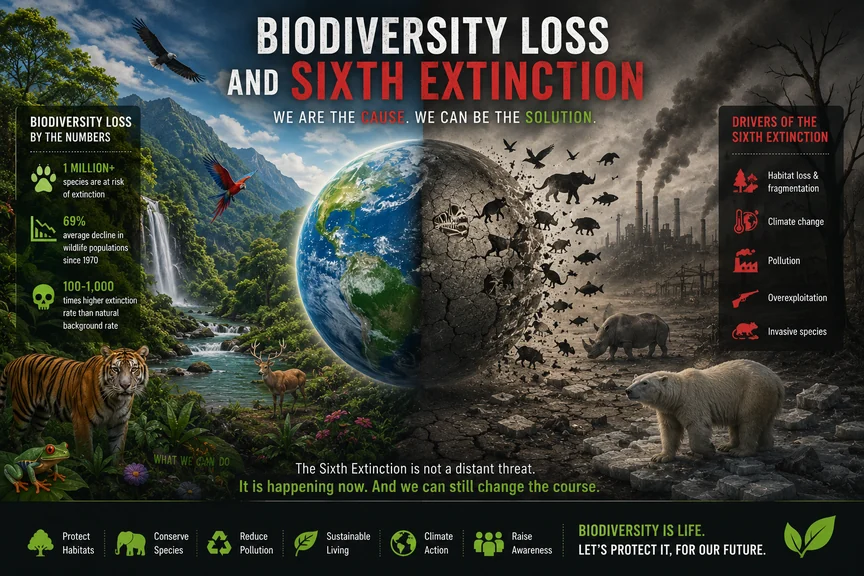
The Anthropocene is not merely a scientific concept; it is a warning. It shows us how deeply human activities have affected the Earth and, in that context, how great our responsibility has become. This concept challenges the conventional separation between nature and society. It compels us to rethink how we build our relationship with the Earth. The future of the Anthropocene is still undecided. The decisions of the present generation will determine whether it becomes an age of destruction or the beginning of a sustainable and just future.
After the Holocene, the Anthropocene, or the human-created epoch, is now manifesting itself through global warming and the feared acceleration of the Sixth Mass Extinction. Across the world, discussions among scientists, social scientists, environmental thinkers, and at various Conferences of the Parties (COP) organized by the United Nations Environment Programme (UNEP), even if states continue on their own paths, have brought forward a new line of thinking through research and deliberation.
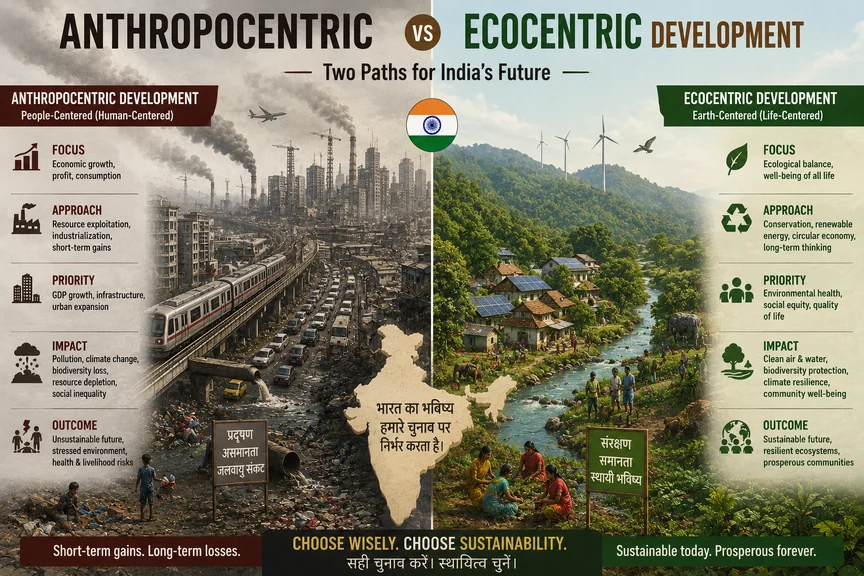
A shift from Anthropocentric Development to Ecocentric Development — that is, from human-centered development to nature-centered development.
This year's World Environment Day theme is:
"Inspired by Nature, For Climate, For Our Future."
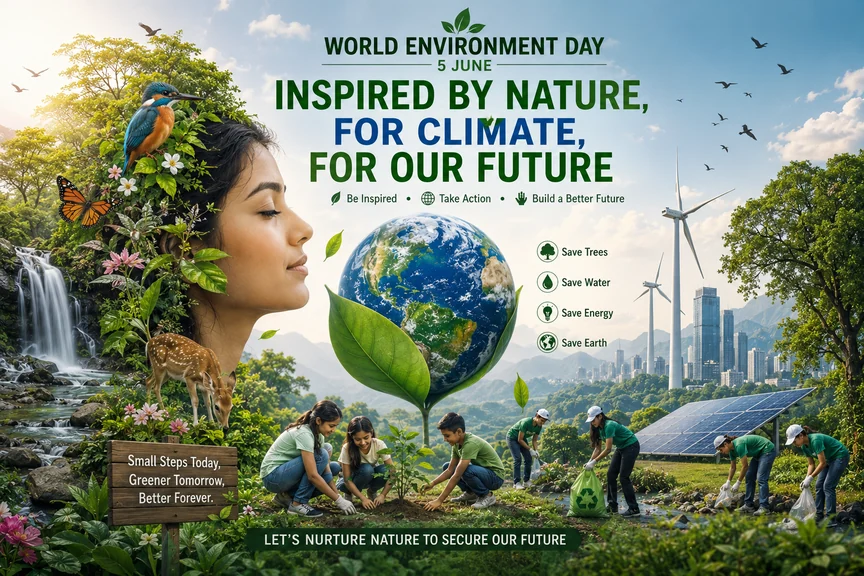
This theme certainly reflects a growing awareness of the importance of nature in addressing the climate crisis. However, it cannot yet be said that the world has completely moved from an anthropocentric model of development to an ecocentric one. Rather, it signals movement in that direction.
Understanding the Two Concepts:
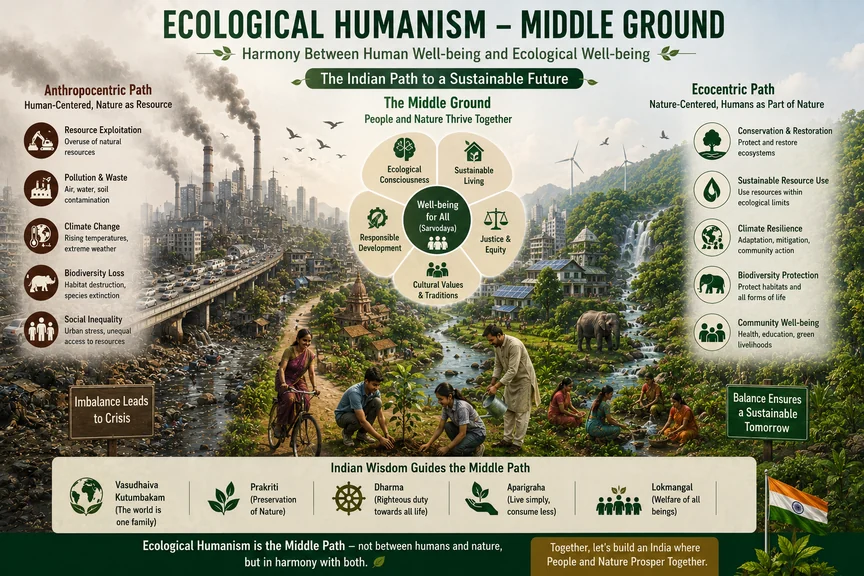
Anthropocentric Development- Nature is viewed primarily as a means of fulfilling human needs. Forests are important because they provide timber, water, and carbon storage for human benefit. The main justification for environmental protection is human welfare.
Ecocentric Development:
Nature possesses intrinsic value whether or not it is useful to humans. Rivers, forests, wetlands, animals, and entire ecosystems have their own right to exist. Humans are seen not as masters of nature but as one component of a larger biosphere.
What Does the Theme Indicate?
The phrase "Inspired by Nature" suggests that instead of controlling or dominating nature, we should learn from it and work in harmony with it.
For example:
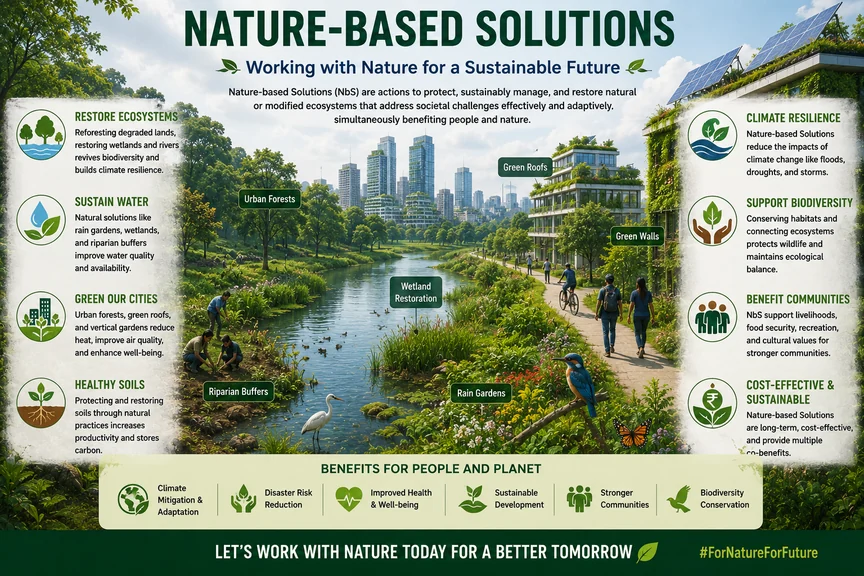
Restoring forests instead of relying solely on technological carbon capture. Conserving wetlands to control floods instead of building massive concrete structures. Adopting environmentally friendly agricultural practices instead of chemical-intensive farming. These ideas are much closer to ecocentric thinking than conventional industrial development.
Why Is It Not Fully Ecocentric?
Consider the second part of the theme-
"For Climate, For Our Future."
The justification remains largely human-centered:
Nature must be protected to address climate change.
Nature must be protected to secure humanity's future.
A fully ecocentric slogan might have been:
"For the flourishing of all life" or
"For the integrity of Earth's ecosystems."
The current theme still places human future at the center of the rationale for protecting nature.
A Practical Example-
Anthropocentric Perspective - "We should protect mangrove forests because they protect our cities from cyclones."
Ecocentric Perspective - "We should protect mangrove forests because they are living ecosystems with intrinsic value; humans are only one among the many species that depend upon them."
Position Reflected by the Theme
"We should protect mangrove forests because nature-based solutions help address climate change and build a safer future."
In other words, it occupies a middle ground between the two perspectives.
What Does This Theme Reflect? The theme demonstrates the growing influence of:
Ecological Economics
Nature-based Solutions
Regenerative Development
Sustainable Development
However, it is not a declaration of fully ecocentric development. Rather, it can be argued that the world is moving from strict anthropocentrism toward an intermediate position, often described by scholars as Enlightened Anthropocentrism or Ecological Humanism. Here, nature is given greater importance, but largely because human survival and well-being depend upon it.
Conclusion:
Therefore, the theme "Inspired by Nature, For Climate, For Our Future" can be understood as a bridge between anthropocentrism and ecocentrism. It is not yet a declaration of fully ecocentric development, but it is an important step in that direction.


Discussion 1 comment